
2026 Collier Symposium: Balancing Privacy and Disclosure, Publishing in the Face of Opposition, and Working with Vulnerable Sources

From student editors to veteran reporters, Collier Award winners offered a master class in journalism done right

Nate Rosenfield, The New York Times/Mississippi Today. Credit: Marin Scotten.

In a keynote address at the April 15 ceremony for winners of the 2026 Peter F. Collier Awards for Ethics in Journalism, legendary editor Marty Baron deplored journalism’s drift toward what he called “an outrage and advocacy industry,” in which nuance, complexity and fact-finding are sacrificed for partisan hot takes, sweeping judgments and summary categorizations of people and institutions as good or evil.

Marty Baron delivered the keynote address at the second annual Collier Awards for Ethics in Journalism on April 15, 2026. Credit: Marin Scotten.

Baron called on reporters and editors instead to recommit to the fundamental work of journalism: finding and publishing the truth, as best it can be ascertained.

I’m here to argue for taking a breath, for keeping an open mind, for giving weight to patient reporting over assumptions and impulsive commentary,” Baron said. “The best journalism, from what I’ve observed, comes from being unsettled — and motivated — by the questions we have yet to answer as opposed to being smug about what we know (or think we know). The truth may not be what we suppose or what we prefer. Humility and curiosity increase the odds that we’ll get things right.”

The nine publications that received 2026 Collier Awards are already practicing what Baron preached, as they showed at an April 16 symposium at NYU’s Arthur L. Carter Journalism Institute. In a trio of compelling panel discussions, journalists from Collier Award-winning news outlets described not just the deep, often wrenching reporting they conducted but also the ethical challenges they confronted en route to publication. Their journalism is the antidote to cynicism about the state of our profession.

Panel 1: Balancing Privacy and Disclosure

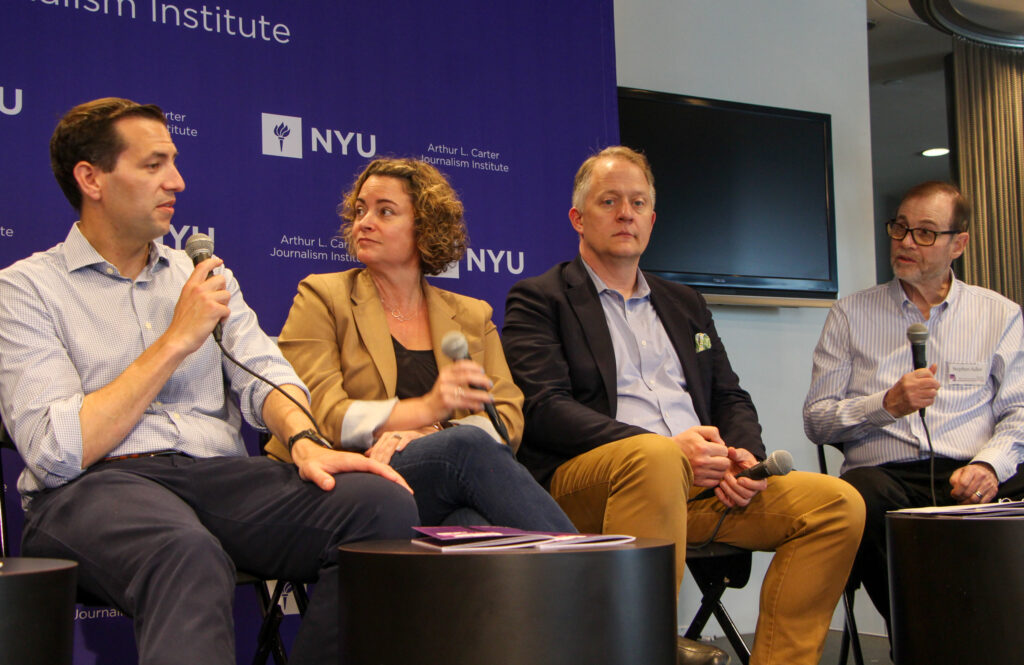
One of the most fundamental ethical questions for journalists is whether the public interest in their story outweighs the potential harm that will ensue from its publication. For members of the first Collier symposium panel, moderated by Ethics and Journalism Initiative advisory board member Tricia Crimmins  of Morning Brew, that threshold question shaped how they reported and presented their stories.

Ana Ceballos and Claire Healy, who led an expose by the Miami Herald and Tampa Bay Times about detainees as the infamous Florida migrant detention center known as Alligator Alcatraz, had to make quick decisions after a source provided the news outlets with a list of names and other personal information about detainees held at the makeshift Everglades site. 

At the time, Florida and federal officials were not disclosing even the names of hundreds of detainees at the site, which was billed as a lockup for “the worst of the worst” migrants. Healy and Ceballos knew they would be providing a service to the families of these detainees – many of whom had no idea where their loved ones were – to publish the list.

But at the same time, Healy told the Collier symposium audience, the Herald and Times team knew they could not contact the men to ask whether they wanted their information to be published. Merely being identified as an Alligator Alcatraz detainee could be damaging because officials had used extreme pejoratives to describe those held at the site.

“We spent a lot of time discussing … what exactly is fair to put out in the public domain?” Healy said. Ultimately the Herald and Times, which won the first-place Colllier Award for local reporting, opted to publish only detainees’ names, not any additional information, in their initial story. That decision gave the families much-needed information about the whereabouts of their loved ones but also minimized the risk of harm to both detainees and the Herald’s source.
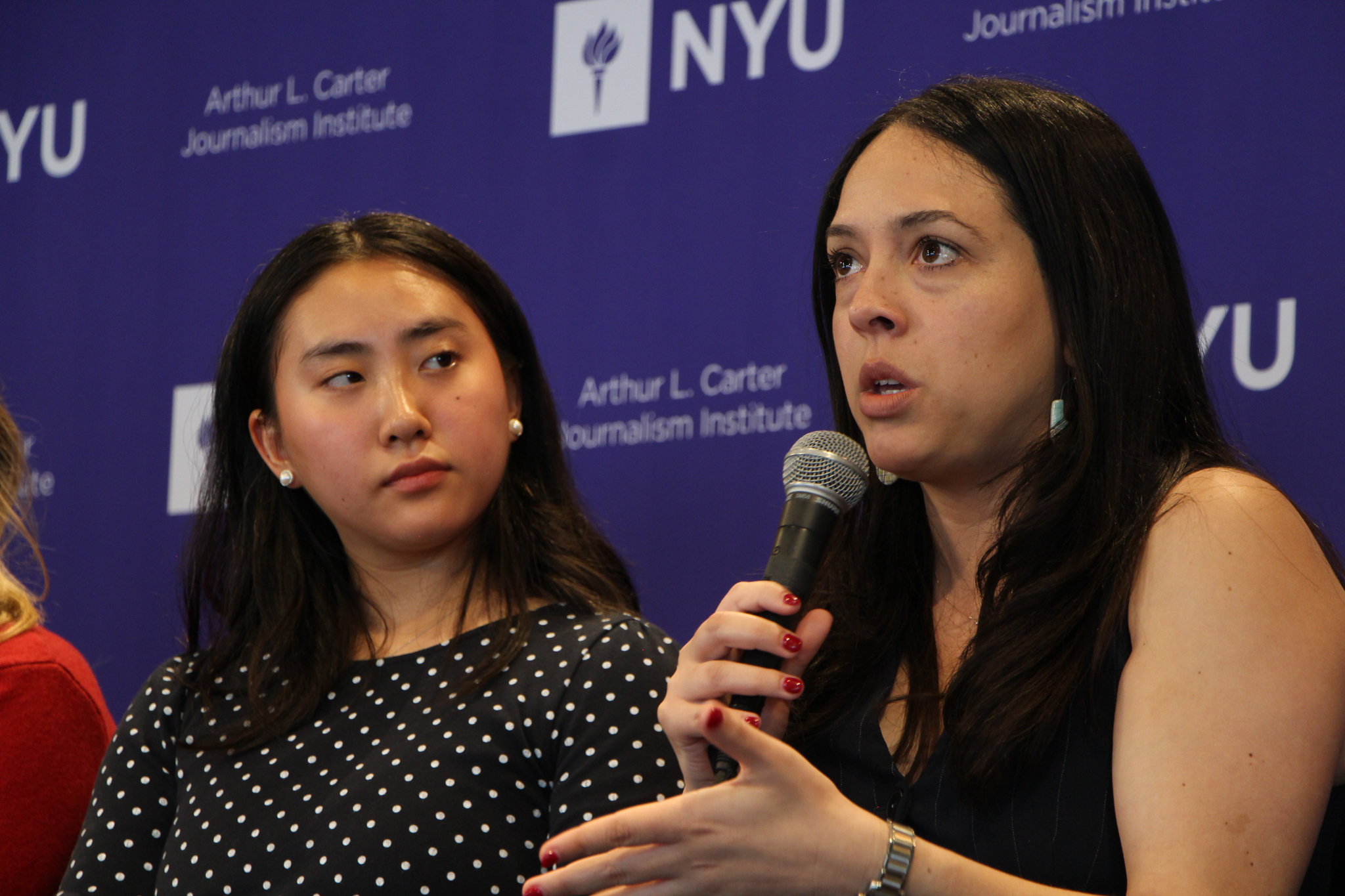
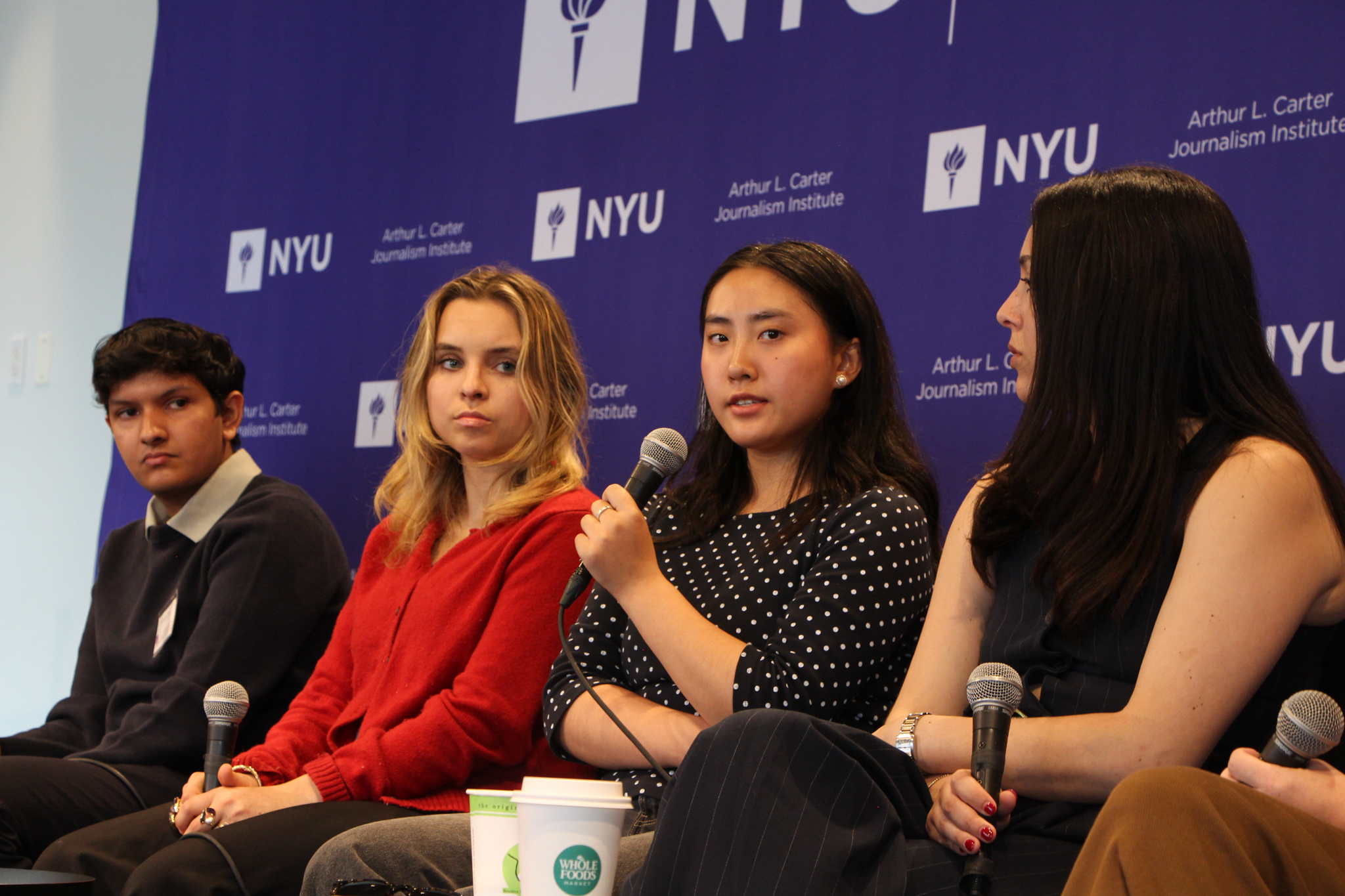
Anna Yang of the The Stanford Daily, who won first place for student reporting, similarly chose to leave out much of what she knew about a sexual assault survivor in her account of the survivor’s two-year wait for accountability from the university’s Title IX process.

The goal of the story, Yang told the Collier audience, was to use her source’s experience to illuminate institutional failures in Stanford’s handling of sexual assault cases without subjecting the woman to retaliation or additional trauma. Yang decided the best course was to use a pseudonym for both her source and the alleged rapist.

Yang worked closely with her source to determine which details of her story could be disclosed without compromising her privacy. Yang had documentary evidence, from both the Title IX case and a subsequent criminal case against the alleged rapist, of the assault and its consequences. But she left it up to her source to decide how to describe the assault in the published piece.

“It was just really important to me that she felt comfortable,” Yang said.

Dealing with hacked data

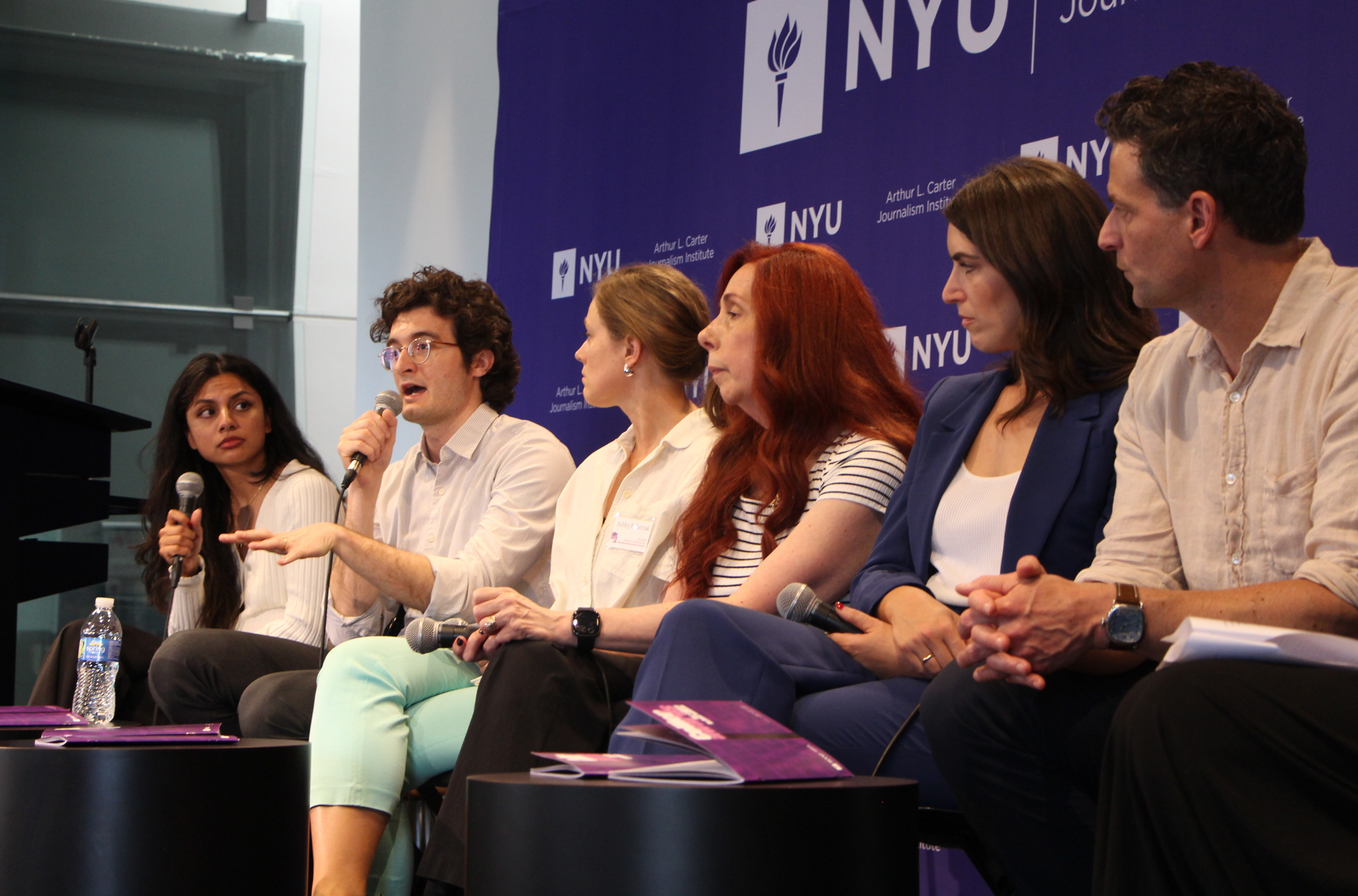
Like Yang, NYU students Dharma Niles and Krish Dev focused on institutional accountability in their coverage for Washington Square News 

of a data breach that exposed the personal information of more than three million NYU applicants dating back to the 1970s.

A hacker published the information on NYU’s website in an attempt to show that NYU improperly used race as a factor in university admissions. Niles and Dev first struggled with the ethics of downloading the hacked data, but ultimately decided that because the information had been released publicly, they would not be compounding the injury to hacking victims merely by downloading the data.

Krish Dev, Washington Square News. Credit: Marin Scotten.

NYU initially downplayed the hack, asserting that the information wasn’t accurate and opting not even to notify many of the affected people, including alumni and applicants who hadn’t attended NYU, according to the WSN stories. But Dev told the symposium audience that when he checked the hacked data for information about his own application, it was all correct. After he devised computer code to sort the data, Washington Square reporters and editors asked more than 100 students to verify that the hacker’s data about them was correct. Niles said the newspaper assured students that it would not identify them but wanted only “to best understand the scope of the impact of the breach without victimizing our sources further.”

Ultimately, Washington Square News was able to verify the accuracy of the hacked information and, after speaking with cybersecurity experts, to cast doubt on both NYU’s handling of applicants’ data and response to the hack. At the same time, Dev told the Collier audience, the newspaper also reported that the hacker’s claims about racial preference in admissions were not supported by the data.

Panel 2: Publishing in the Face of Opposition

Journalists in the U.S. have been standing up to powerful officials since the colonial days of John Peter Zenger, said Ethics and Journalism Initiative founder and director Stephen Adler as he introduced panelists from The Associated Press, The Atlantic and The Retrograde, an independent student newspaper at the University of Texas at Dallas.

But that long history hasn’t made it any easier for reporters and editors to do their jobs when officials deny access, decline to respond or hurl accusations at journalists. Members of the panel that Adler moderated made clear to the Collier audience that official opposition requires journalists to use particular skill, ingenuity and thoughtfulness.

The Retrograde, which was honored for its reporting on UTD’s institutional failure to investigate Title IX complaints and to sanction accused abusers, was born from a dispute between university officials and editor Gregorio Olivares Gutierrez. Olivares Gutierrez had been the editor of the university-supported campus newspaper, The Mercury, but clashed repeatedly with administrators who chafed at his insistence on journalistic independence. On the day he was formally fired as editor of The Mercury, he and his staff retreated to a Thai restaurant, where they formulated plans to start a new outlet entirely independent from the school. Within two weeks, Olivares Gutierrez told the audience, The Retrograde was up and running.

“We’ve just been pumping out journalism since then, with multiple conflicts with the school,” he said. “They really don’t like us covering anything.”

But in a way, said Olivares Gutierrez and Retrograde reporter Sherlyn Dominguez, the tense relationship with UTD administrators has made them better journalists. The staff has learned to use public record requests and to develop sources who help them hold university officials to account. For the Title IX story, The Retrograde was stonewalled by UTD and stymied by the nondisclosure agreements that it imposed on complainants. It surmounted those obstacles by obtaining data from similarly-sized universities and comparing the information to UTD’s public Title IX reports. That data ended up being undeniable evidence of the university’s shortcomings.

Official resistance also turned out to be a boon to the public in The Atlantic’s reporting on the Trump administration’s mishandling of classified information in the run-up to a 2025 U.S. attack on Houthi pirates in Yemen.

In the initial story in the saga now known as Signalgate, Atlantic editor Jeffrey Goldberg revealed that senior Trump officials, including Department of Defense Secretary Pete Hegseth, had mistakenly included him in a Signal chat about their plans to bomb the Houthis. The Atlantic, as veteran national security reporter Shane Harris told the Collier audience, took great care in that first story to screen out any information that could be considered classified or might otherwise compromise national security. After what Harris called a “really deliberate, painstaking process” that included requests for comment from all of the relevant federal agencies, The Atlantic opted, from an abundance of caution, not to publish the texts themselves.

Harris said The Atlantic had considered what the Trump administration’s public explanation for the mishandling might be. “They ended up giving us the one [response] I hadn’t anticipated, which was to say, ‘Oh, none of this is classified,’” Harris said. The administration, moreover, accused The Atlantic of lying about the contents of the texts in the Signal chat.

That response, Harris said, “left us no choice but to publish everything.” 

In a second Signalgate story, The Atlantic did indeed publish almost the entire Signal exchange, redacting only the name of an active intelligence officer whose identity the CIA asked The Atlantic to protect. At the Collier awards ceremony on Wednesday night, Atlantic executive editor Adrienne LaFrance pointed out that the magazine ended up showing more concern for  protecting confidential information than did the Trump administration.

“It’s about all Americans”

The AP’s Washington bureau chief, Anna Johnson, and deputy chief, Zeke Miller, took members of the Collier symposium audience behind the scenes of the wire service’s decision to continue using the Gulf of Mexico’s historical name despite a Trump executive order renaming it the Gulf of America – and the ensuing showdown with Trump officials that culminated in a lawsuit by the AP to regain full access to the White House.

The AP, Johnson said, chose not to change its style for the Gulf of Mexico because it reasoned that a U.S. president does not have the unilateral authority to change the name of an international waterway whose name has been in use for hundreds of years. (The wire service did change its style for Alaska’s Denali, which Trump ordered to be renamed Mt. McKinley.)

(Left to right) Zeke Miller, The Associated Press; Anna Johnson, The Associated Press; Shane Harris, The Atlantic; Stephen J. Adler, moderator. Credit: Marin Scotten.

When the White House realized the AP was sticking with the gulf’s longtime name, Miller was informed that he would be barred from the Oval Office. The wire service, he said, sat down with Trump officials to hear them out and to explain the AP’s reasoning. But “it became pretty clear that the only option, from the White House perspective, would be for the AP to change its language,” Miller said. “And we knew we could not do that. It wasn’t really about the Gulf of Mexico. It was that if you change your language, where does that end?”

The AP, which won the first-place Collier award for national/international reporting, sued Trump administration officials in February 2025 to restore the wire service’s full access to White House press events. The AP prevailed in the trial court but the administration’s appeal is pending.

Johnson said she is proud that her bureau has found ways to continue to serve its thousands of U.S. and international customers despite the restrictions. In a way, she said, the AP has become more resilient and better prepared to find alternatives to traditional access, as many newsrooms had to do after declining to accept restrictions imposed last year by the Pentagon.

But ultimately, she said, the AP had no choice but to stand its ground and sue the White House. “It’s not about us being in the [White House press] pool, per se,” Johnson said. “It really is about freedom of speech. And it’s not just about the AP. It’s about all other media – and, truly, all Americans.”

Panel 3: Ethically Covering and Working with Vulnerable Populations

In a panel moderated by Ethics and Journalism Initiative assistant director Ryan Howzell, reporters from New Jersey’s The Record, Mississippi Today and NBC News/Noticias Telemundo transfixed the symposium audience with accounts of their sensitive, high-risk work with vulnerable sources.

For all of these journalists, an expansive timeline was crucial. Mississippi Today, for instance, worked with The New York Times to expose abuses at a county jail where select prisoners known as “trusties” were enlisted to participate in assaults on fellow prisoners and to provide free labor on the sheriff’s farm. Mukta Joshi and Nate Rosenfield detailed the challenge of reaching out to prisoners, former prisoners and former prison guards.

“This was a terrifying prospect for our sources,” Rosenfield said. “Getting them to feel that they could trust us with their stories was an enormous barrier to overcome.”

The risks became all too clear when one of their best sources, a former trustie who said he had witnessed and participated in abuses, including a horrific beating of a prisoner who escaped and was recaptured, suddenly went silent after weeks of on-the-record interviews with Mississippi Today’s Brian Howey.

As Rosenfield related the story to the symposium audience, it turned out that the man, who had been in state prison, was transferred back to the county jail. When Howey finally got hold of him, via the man’s girlfriend, the source said he’d been questioned by the sheriff’s office about his conversations with Mississippi Today and coerced into signing a statement recanting everything he had told reporters.

“It’s like your worst nightmare,” Rosenfield said. “We were scared for our source. We were scared for our story.”

The incident prompted Mississippi Today to “do what we always do and report it out,” Rosenfield said. (The outlet spoke, in all, with more than 70 sources for the story.) They ended up including the sheriff’s intimidation of their source in the story, as an example of the power that law enforcement officials hold over prisoners at the jail.

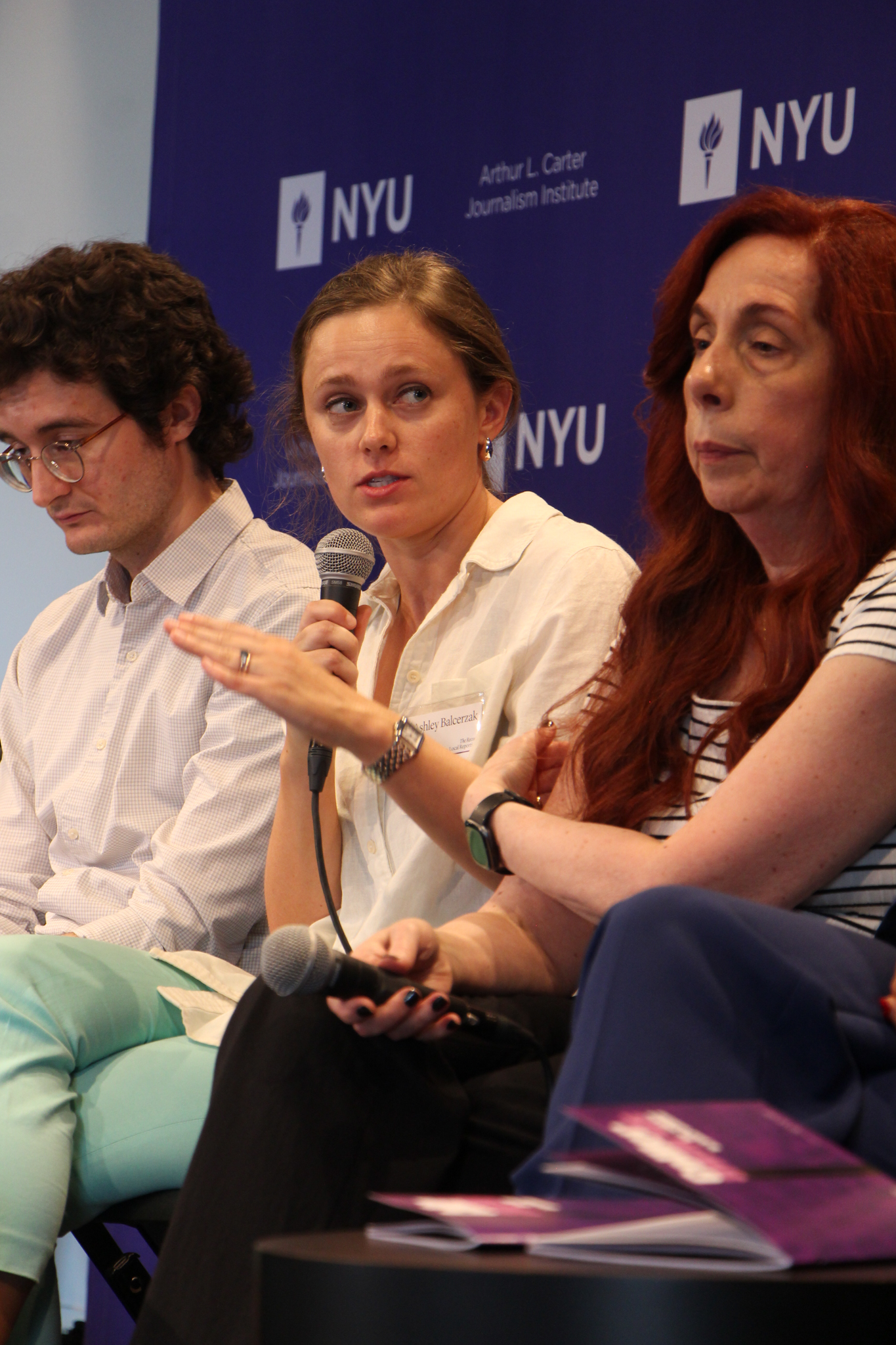
It took Ashley Balcerzak and Jean Rimbach of The Record more than a year to report their devastating series, Hidden at Home, about abuse and neglect of developmentally disabled adults in New Jersey’s group home system.

It wasn’t hard, Balcerzak and Rimbach said, to find families with distressing stories. But persuading families (and whistleblowing employees) to go on the record, making sure they understood the consequences of speaking to reporters and painstaking fact-checking throughout the process involved “really, really heavy, hours-long conversations,” Balcerzak said.

Those conversations, Rimbach added, were especially difficult with parents whose children had died in a group home. “We were asking them to reopen a wound,” she said. “Some of them, it became very stressful for them. I can think of a couple of people who flew off the handle…But you had to understand where they were coming from. They had lost somebody, and lost them in a terrible way, and they hadn’t gotten justice for it.”

Finding the nuance

Jon Schuppe and Liz Kreutz were two members of the NBC/Telemundo team that produced Dealing the Dead, an expose on a Texas teaching hospital that sold body parts of people whose families never consented to the donation of their loved ones’ corpses – and in some case were not even notified by authorities that their family member had died. It fell to Schuppe, in several instances, to inform families about the fate of their loved ones.

Schuppe and Kreutz described multiple layers of complexity in their reporting. Families felt shame, Schuppe said, about relatives who died on the street and went unclaimed. Some families – including the ex-wife and children of the lead character in NBC’s story – were divided in their feelings about their relatives. “I found myself personally dealing with some difficult family dynamics,” Schuppe said. “And that was a piece that was unexpected for us to have to navigate.” 

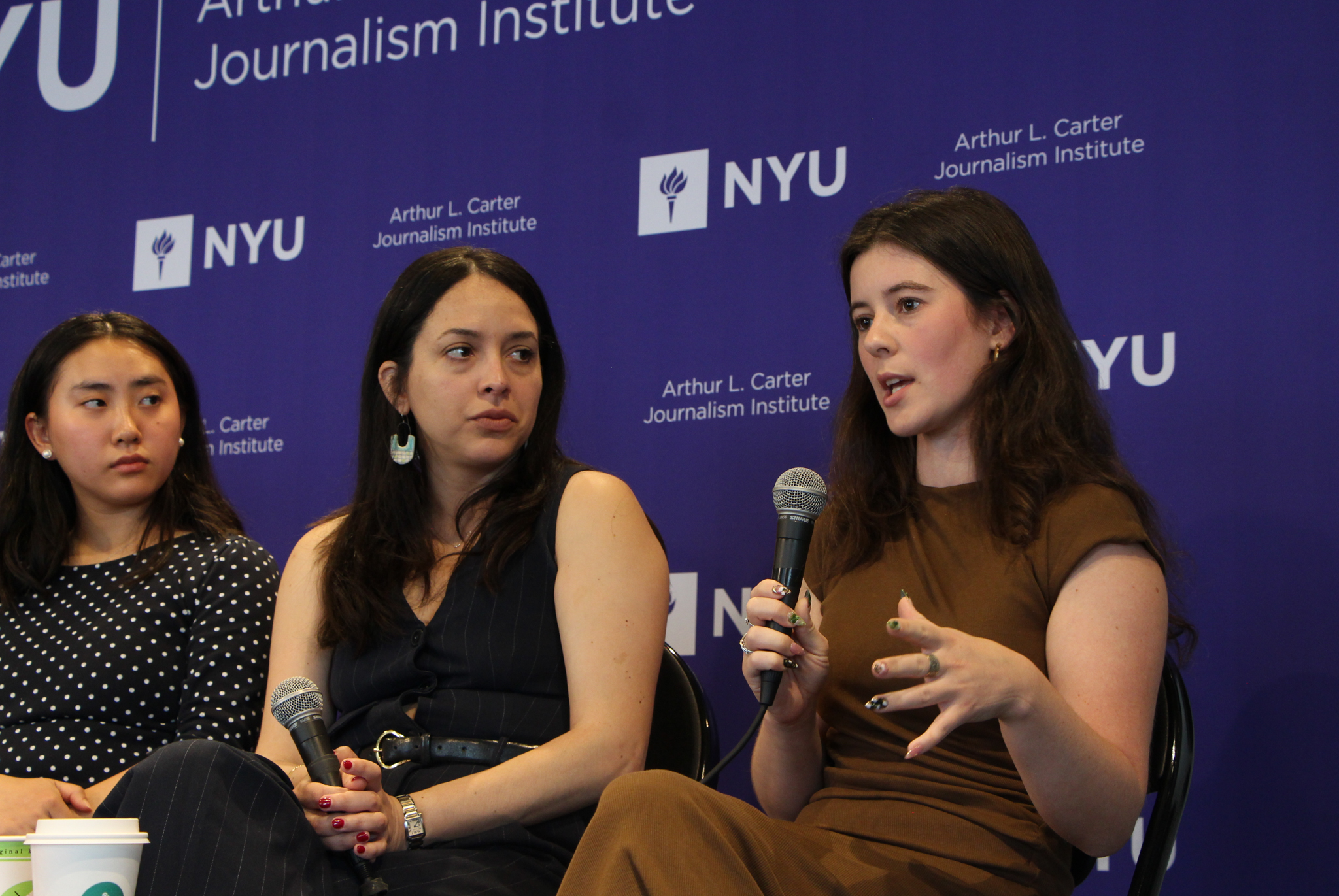
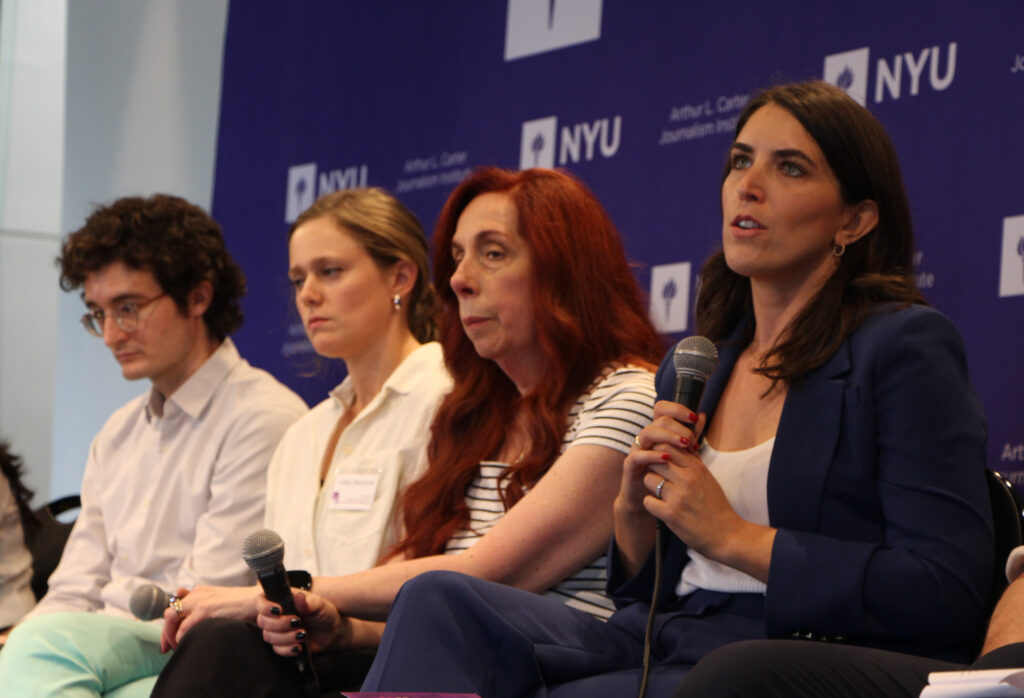
(Left to right) Nate Rosenfield, The New York TImes/Mississippi Today; Ashley Balcerzak, The Record; Jean Rimbach, The Record; Liz Kreutz, NBC News. Credit: Marin Scotten.

Kreutz, who worked on the broadcast version of the story, described her techniques for making sources feel comfortable before asking to film them. She first approaches people without lights and cameras, Kreutz said, and asks just to have a conversation. She even thinks about the clothing she wears in early interviews, she said, taking care not to look intimidating. “Over time,” Kreutz said, “you build a relationship where they ultimately trust you and are then comfortable enough to share their story.”

Giving sources who are dealing with complex emotions enough time and space to understand their own feelings is critical, Schuppe said – an observation that applied equally to the Mississippi Today and Record stories. 

“Almost nine times out of 10, just give them time,” Schuppe said. “Let them come around and feel some sort of agency about when they can talk about it. That’s a real piece of advice that works almost every time.”


The Collier Symposium is part of the Collier Awards for Ethics in Journalism, a two-part event celebrating reporting that meets the highest ethical standards in the face of pressures or incentives to do otherwise. Submissions for the 2026-2027 Collier Awards open in September.