

Journalism can be a risky business, and not just for war correspondents. Threats can arise suddenly and unexpectedly in all kinds of reporting situations: law enforcement officers deploy tear gas and rubber bullets at a protest; a shooter disrupts a neighborhood parade; a would-be assassin shows up at a black-tie gala for journalists. The First Amendment is scant protection when your physical safety is endangered.
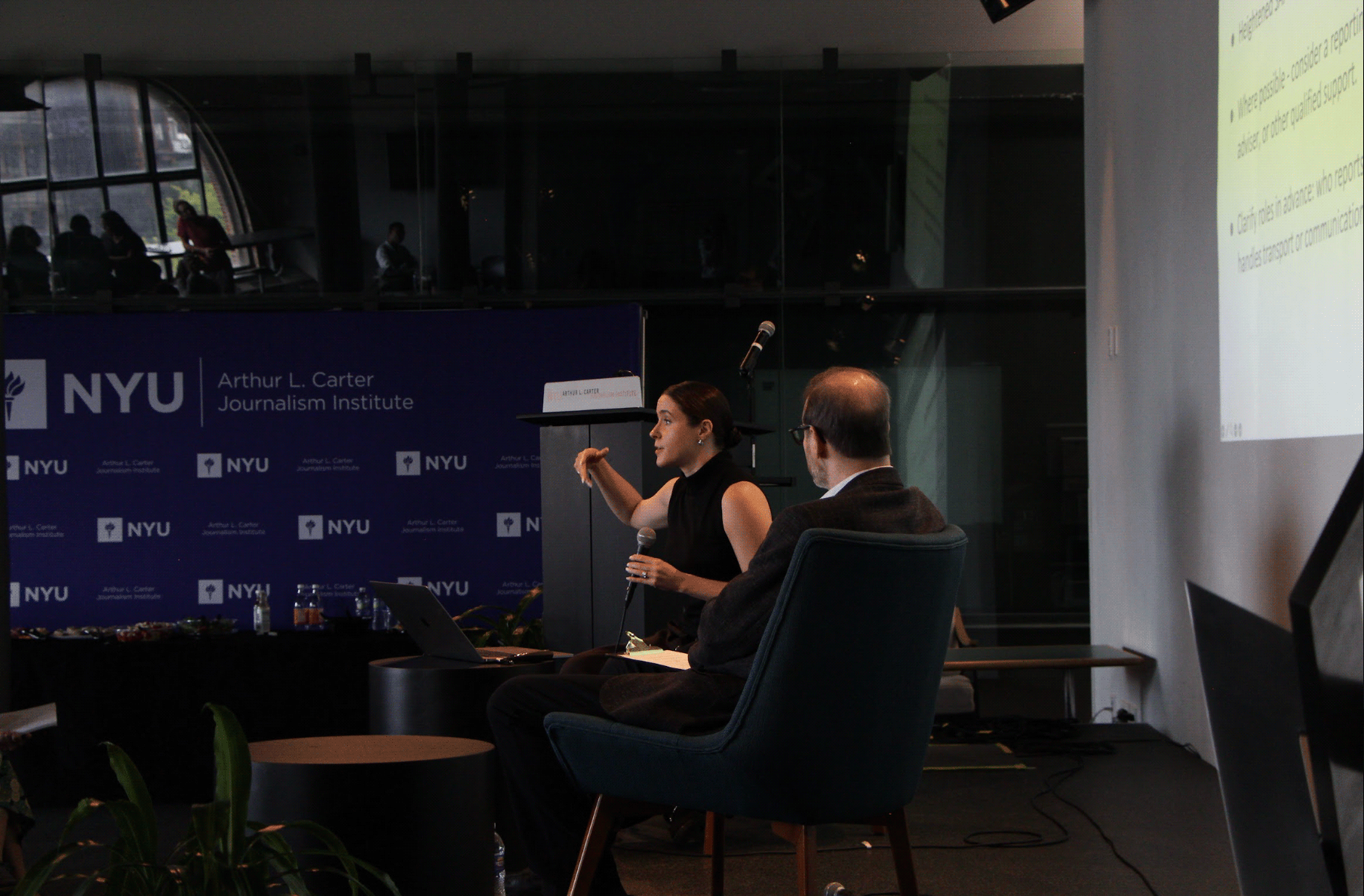
But there are many ways for reporters to mitigate risk, said Kerry Paterson, the vice-president of global news security at NBC Universal. Paterson spoke at an Ethics and Journalism Initiative workshop at NYU’s journalism school on Sept. 9, offering her hard-won advice to a packed house.
Paterson’s most important piece of wisdom: Plan ahead. A risk mitigation plan, she said, should be part of any assignment that might escalate dangerously. And that plan shouldn’t merely consist of locating potential exits and planning check-in calls with your editor (although both of those steps are important.)
Before even accepting an assignment, Paterson advised, reporters should assess their own tolerance for danger, as well as personal characteristics that might add to their risk. All kinds of factors, she said, can affect whether a particular journalist feels safe on an assignment.
An LGBTQIA journalist, she said as an example, might face heightened risk in countries where same-sex relationships are illegal. A reporter from the Sunbelt might not have the winter driving skills needed to cover a wintertime caucus in Iowa. Or a journalist working in the U.S. on a visa might be worried about re-entering the country from an overseas reporting trip.
“Your safety is the most important thing,” Paterson said. “What is a level of risk that we’re willing to tolerate? And I think that’s sort of the way you want to be thinking about this yourselves as you go forward.”
Paterson also emphasized that journalists should be concerned not just with their physical safety, but also with digital and psychological security. If, for instance, you are worried about your children being doxxed online or are having trouble coping with a traumatic reporting experience, you probably are not feeling safe. All three safety factors, she said, must be intact, like the legs of a stool, for reporters to be able to do their jobs.
Risk Assessment
Paterson outlined key questions for journalists to ask – and document – when initially assessing physical risk. They are:
- What are the hazards of the assignment?
- Who or what could pose a threat?
- How likely is each risk?
- How severe could the consequences be?
- What can be mitigated – and is the remaining risk acceptable?
But the questions don’t end with this initial risk assessment. Paterson urged audience members also to document a risk assessment plan to address:
- Equipment and attire, including whether you’ll need protective gear and how to safeguard your identity documents, press credentials, and money
- Transportation and routes, including exit strategies and meeting points for your team to assemble
- Communications, including specific check-in procedures with your editor and a back-up plan if cell service is disrupted
- Environmental factors such as weather, terrain, and health concerns
- Sourcing, to keep your editor apprised of who you intend to talk to and whether your plans include hostile sources
- Timing, so your news organization knows if you’ve been out of contact for longer than expected
- Escalation: What will you do if the situation grows more dangerous when you’re in the field? Under what circumstances will you leave the scene?
Be sure to share your plans with others in your newsroom.
‘Dynamic’ Risk Mitigation
Reporters in the field, Paterson said, should take a moment when they arrive on the scene to evaluate their surroundings. Then they should remain vigilant, constantly reassessing the situation with exit routes and checkpoints in mind.
“If you are working as a group or a team, this is easier to account for because you can take turns watching,” Paterson said. “If you are operating solo, it is imperative that you pay close attention to… reassessing the environment. Trust yourself. If something feels off, trust your gut.”
Paterson listed some developments that may signal increasing risk:
- Changes in crowd behavior
- The appearance of an empty police van or bus intended to transport multiple arrestees
- Law enforcement officers donning gas masks or riot gear, or carrying zip ties
- Officers beginning to force protesters into a cordoned area
- Weaponry
If you are in a deteriorating situation, Paterson said, take a moment to decide on your course of action, remembering your risk assessment plans. Communicate with other members of your team. (In general, team members should defer to the person with the lowest risk tolerance when safety becomes a pressing concern, she said.) Avoid getting trapped between protesters and law enforcement officers. Consider whether it’s time to exit the scene.
If you are unable to exit, Paterson offered advice for de-escalating dangerous or chaotic situations:
- Obey orders from law enforcement officers, even if those orders seem to impinge on your First Amendments rights. Document officers’ actions. If possible, contact your news organization or outside lawyers.
- Try to remain calm. If you are confronted, do not argue. Maintain eye contact, use open-handed gestures, and keep distance between you and your confronter.
- Do not turn your back on the aggressor.
- Try to move toward an exit.
- Show your press credentials if you think it will help calm the situation. (If you are being confronted because you are a reporter, this suggestion obviously does not apply.)
- Support your colleagues if you are working as a team
- If you are separated from colleagues, try to meet up at a pre-arranged site
In the Aftermath
If a reporting assignment – or even just an incident in your community – left you feeling unsafe or unstable, Paterson said, it’s important to acknowledge those feelings. Debrief with colleagues and editors to figure out what went wrong so your news organization can plan better the next time around. Limit your exposure to graphic imagery or anything else that triggers unsettling memorings. Take time off.
“This doesn’t make you weak. It doesn’t make you a bad reporter. It doesn’t make you ill suited to the job,” Paterson said. “It makes you a human.”