

This interview has been lightly edited for length and clarity.
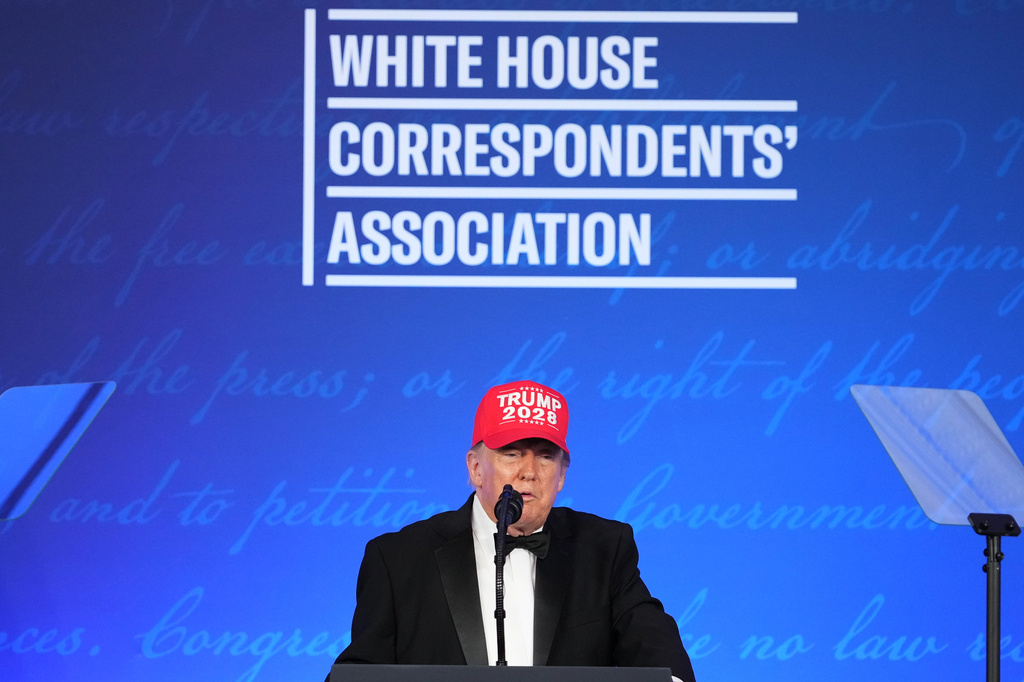
President Donald Trump made his first appearance as president at the White House Correspondents’ Association dinner on July 24, a rescheduled gala after the WHCA’s originally scheduled event in April was disrupted by a shooter. The president spoke for more than an hour, and, in CNN’s words, “insulted journalists by name, repurposed old nicknames for political opponents, made a strange number of fat jokes that weren’t funny at all, and sounded mad at his unnamed writers for giving him weak material to work with.”
The day after the event, Peter Baker, chief White House correspondent for The New York Times and a longtime member of the WHCA, posted on social media that although he supports the group’s mission of defending journalists’ right to report without fear or favor on U.S. presidents, “last night did not advance that cause.Time to rethink the dinner.”
Baker spoke in early August with Ethics and Journalism Initiative senior adviser Alison Frankel about why it’s not wise for reporters to be seen partying with people they cover, including the president.
Alison Frankel: I saw your social media post calling for an end to the White House Correspondents’ dinner as we have known it. So I wanted to explore that with you and ask, Why? Why do you think this year was different?
Peter Baker: Oh, actually, there’s been my view for years. We should have rethought it a number of times in the past.
We – The New York Times – decided in 2007 to stop going because we didn’t think it really was a good idea anymore. And so, it’s the paper’s view, and my view, that it doesn’t really represent what we want to be and the message we want to be sending as professional journalists. [Ed. note: The Times allows individual journalists to attend the event if they are receiving awards but does not have an institutional presence there.]
That predates Trump. We didn’t go under Obama, we didn’t go under Biden. The dinner the other night showed why that concern was prescient almost two decades ago. We should be about promoting journalism, and I feel like we need to think through the best way to do that. That dinner didn’t seem to me, hasn’t seemed to me for many years, to really accomplish that goal.
Alison: I thought it was weird, I guess, 10 years ago, 15 years ago, when, suddenly, news organizations were vying to get the shiniest celebrities at their tables.
Peter: Well, there’s a history here. It really dates from the 1980s when Michael Kelly [then a journalist at the Baltimore Sun] first brought Fawn Hall [of Iran-Contra document-shredding fame], to one of these dinners, and everybody was all abuzz about that because it hadn’t been used as a venue to bring people who were in the middle of a big story, the way she was. And that sort of, I think, began over time to open the door to more and more celebrity guests. It became a sort of arms race: Who could bring the glitteriest guests, who could bring somebody from Hollywood, who could bring somebody from Wall Street, whatever. It became less and less about talking about our work and more and more about that red carpet, and the pictures and the star quality of the whole thing.
I think that that’s why the editors, my editors, at the Times felt increasingly uncomfortable with it.
Alison: It does seem like the Times is sort of alone on that, though. Are there other major news organizations that made that same decision to your knowledge?
Peter: I think we’re the main one that came to that conclusion and decided not to.
I think a lot of our colleagues and friends at other organizations thought that we didn’t make the right decision [and] didn’t agree with us. I understand that, but I have to admit that I don’t think there’s anybody at the Times who regrets it. And there are a lot of people this year who didn’t go, quietly. No organization that I know pulled out as an institution, but I know a lot of longtime journalists who decided they just didn’t want to go this year or didn’t want any part of it…
I didn’t take a poll, so I don’t know what people did or didn’t do on the first [scheduled dinner in April], but I heard more people on the second one say, “Yeah, I just didn’t want to go this time. It just didn’t feel right.”
Alison: The justification that the WHCA always gives is: We’re honoring journalists who have done great work, we’re speaking up for the First Amendment. We want to get attention for those issues, and this is the best way to attract public attention to the good work that the White House press corps is doing. What’s a better way, in your view, to get that attention?
Peter: Well, look, I have nothing but respect and admiration for my friends and colleagues who are running the association, or who are advocates for the dinner. We just happen to have a disagreement on this. I think that there are other ways to advocate for our journalists, other ways to award good journalism, and other ways to give scholarships to young journalists. It doesn’t have to be like this.
That’s why I said rethink it. I’m not saying we shouldn’t find a way to celebrate good journalism and promote the First Amendment. Of course we should. [But] we should think about the best way to do that. This [gala] has now become kind of a distraction. Rather than talking about journalism, we’re talking about the dinner. And that just doesn’t seem like the best use of our time.
I just would hope we could have a conversation about a better way to do it. I wish we had done it during the pandemic. I thought that was actually a really opportune moment, because we had to cancel, like everybody else, we had to cancel that year. We had a great opportunity to come back the next year and say, “Okay, we’ve had a chance to think through what we want to do.” But that option slipped away from us.
Alison: It’s interesting that you said that the Times made the decision not to attend the dinner long before the Trump administration. Do you think questions about the event have become more pressing in light of the Trump administration’s attitude toward news organizations, including lawsuits and subpoenas?
Peter: Of course. What Trump has done in terms of attacking the White House press corps shows why we shouldn’t be doing this in the first place.
It’s not just him, but he is the more extreme version of it. Let’s look at the week we had [before] this second dinner. On Tuesday, Trump’s lawyers were in court in Miami, in a lawsuit against the BBC to punish them for their coverage. On Wednesday, his lawyers were in court in Tampa, in a lawsuit against The New York Times – I’m a defendant – to punish us for our coverage. On Thursday, lawyers from the Justice Department, Trump’s Justice Department, were in court in New York, trying to enforce subpoenas against my colleagues at The New York Times for doing their job. And then Friday, we have a First Amendment dinner in which we are pretending all this didn’t happen. And that just seems out of sync to me.
Alison: I didn’t see audience shots from the broadcast well enough to know, but I wonder if reporters at the event were applauding when Trump said Kaitlin Collins [of CNN] should smile more.
Peter: I wasn’t there. I don’t know.
Kaitlin Collins is an amazing reporter, and we should be applauding her and not applauding insults of her. It doesn’t seem like a hard thing to me. But, you know, that’s where we’re at.
There’s a reluctance on the part of reporters to change things, [particularly if it may] look like we are trying to make a political statement. We don’t want to make a political statement. If we had somehow disinvited the president, and this had been the first time this had happened in history, then that would be seen as a political statement, and again, it’s not in our interest to be part of the story. We want to be covering the story. I think that’s why a lot of my colleagues are understandably reluctant to, you know, switch gears….
I get that, and I don’t want us to be seen as the opposition. We are not the opposition.
[President Trump] wants us to be the opposition. And we shouldn’t be. We should be the independent press. That’s a different role, and you do have to be careful about the messages we send, because otherwise, you lose credibility if you’re seen as just being partisan. We’re not partisan and we shouldn’t be partisan.
I get that reluctance that people may feel. But, as you say, we were left, unfortunately, with the spectacle of a First Amendment dinner, at a time when the president we invited has done more to try to pressure us not to do the job that we do.
He took over the White House press pool. He kicked the Associated Press out. There was a mention of the Pentagon press corps at that dinner without mentioning that the Pentagon Press Corps was kicked out of the building for refusing to sign away their rights to do their job. Obviously, the lawsuits, we just talked about, the subpoenas we just talked about, the use of the [Federal Communications Commission] to put pressure on organizations, the effort to change ownership of media organizations to friendlier owners: We’ve never seen a president do all of that, never.
You’ve seen past presidents who have certainly put pressure on us. We objected vociferously when President Obama had more leak investigations than all the other presidents combined. We thought that was a terrible thing. We objected when President Biden wouldn’t have press conferences very often and wouldn’t give interviews to newspapers like The New York Times, The Washington Post, or The Wall Street Journal. [But] this administration has taken the efforts to control, pressure, and intimidate journalists to new levels, as my publisher A.J. Sulzberger has talked about repeatedly.
That’s something we need to be focused on because [it’s] important that we have an independent press. It’s important not just under this president. It will be important under the next one, and the one after that.
Alison: This raises an interesting point. When the Trump administration kicked the AP out of the press pool and when the president has repeatedly used press question-and-answer sessions to insult reporters, specifically female reporters, there doesn’t seem to be a whole lot of push back by people in the room. Why do you think that is?
Peter: We have this conversation all the time, and I think that the reason is that we don’t want to make it about us. We don’t want to get into a contest with him over insults. We want to ask him questions and get answers on stories that are important to our readers and viewers. And you don’t see a Kaitlin Collins or any of these other women, or men, who get insulted by the president give it back to him because they’re just going to do their jobs. They’re professionals.
They’re not gonna let him rattle them. I think that that’s the feeling among reporters is, we’re not trying to create a scene here. He may be, but that’s not our job.
My colleague David Sanger was on Air Force One not that long ago, on a videotaped exchange, where the president of the United States is saying that he’s guilty of treason. Now, David didn’t make an argument about that. He kept asking questions. That’s what we do.
It’s a hard position to put these reporters in, because we have a job to do, and the job is not to get into playground spats. The job is to find out information and challenge a president where we can. Keep in mind that White House press pool now, because [the Trump administration] has taken it over, no longer has as many what we would consider to be traditional journalists in there, as it used to.
There are more and more of these people who are working for politically ideological organizations, who are supporters of the president, not independent journalists in the traditional sense. So there are fewer of those [independent] voices. And therefore, I think the ones who are still there feel it’s … even more incumbent on them to keep the focus on the story.
Alison: Do you feel like that approach is working? Do you feel like the public trust has increased as reporters have been visibly doing their jobs as opposed to pushing back?
Baker: Probably not, but I’m not sure it would be more successful to do the opposite. It might feel more satisfying to say, “You know, sir, that’s just not appropriate.” And maybe we should be doing more of that, but I don’t know that would [make] any difference in terms of our public credibility.
And again, I think we’re trying to avoid creating a spectacle. We’re just trying to elicit information…
And so, you know, I agree with you. I’m not saying it’s a successful strategy. I’m just not sure I see another one.
Alison: If you were to design next year’s WHCA dinner, how would you do it?
Peter: Well, I would love to sit down with my colleagues and have that conversation. I’m not wedded to anything in particular. I’m not a leader or an organizer, but I just think that we could think of some alternatives.
I think a lunch that’s just for reporters, and editors, and gives out scholarships and awards would be great. I would get rid of the red carpet. Get rid of the celebrity guests, make it about journalists and not black tie and gowns.
And the whole industrial complex that comes with it now, the whole White House dinner industrial complex. It’s like five days now! It’s like … endless [parties and afterparties].
There’s a lot of money now involved in this, so it’s not gonna simply go away, I don’t think. But I think they’ve gotten out of hand. It starts on Thursday night, or maybe on Wednesday night, and the dinner’s on Saturday, and the parties every night, before and after the dinner, and then, again, on Sunday, there are brunches, and so many people got into this, that it’s hard to see rolling it back.
But I think that’s one of the things that got away from us. These parties aren’t about supporting journalism.
Alison: It does seem like it’s really the pinnacle of the idea of access journalism, that you’re partying with these high ranking officials who you are also covering. I wonder if the spectacle of that does impact the public view of journalists as being part of the elite and cozy with the people they’re covering.
Peter: Yeah, I think that’s a real concern, absolutely.
Now, in some ways, obviously, we always spend time with our sources. We do go out to dinner or drinks with sources. The idea is to get to know people who are in positions of authority in order to get information out of them, get to know them better, and so forth. But the fact that it’s done, in terms of the dinner, in such a public and, and seemingly celebrity-obsessed way – rather than a business dinner or even just a quiet lunch, or coffee – I think that just sends a signal to the public that we don’t want to send.
I don’t know that it stops anybody in that room, by the way, from doing their jobs. The journalists I know who go to dinner are still going to be waking up the next morning and writing tough pieces about the people they saw at that event, many of them, anyway. I don’t know that it does anything in a serious way to change or compromise their journalism, but I do think it sends a message or a signal to the public, which looks at that, and says, “Huh, are they really independent or not?”
And we should be cognizant of the message that we’re sending, think about if that’s what we want people to take away from it.
We reached out to the White House Correspondents’ Association for comment on Baker’s criticism of the gala and suggestions for alternative ways to honor WHCA journalists. The group did not respond to our queries.
In an August 16 interview with New York Magazine, WHCA president Jacqui Heinrich of Fox News said that the dinner long predates Trump and that the WHCA will continue to invite the president, regardless of who occupies the office, every year.
Heinrich said the gala has its “usual complainers” but said it was “valuable” to have Trump appear on stage with reporters who were being honored for stories that were critical of him. Trump, she said, “was taking part in a tradition that recognizes the importance of a free press. And we will continue to hold the dinner when he’s out of office.”