

The last time that the Society of Professional Journalists adopted changes to its ethics code was in 2014. Donald Trump had not yet announced his candidacy for the 2016 presidential election. OpenAI had not yet been founded. And more than three-quarters of Americans trusted the information they received from national news organizations, according to Pew Research.
Times, clearly, have changed.
Last November, SPJ announced that a blue-ribbon committee would undertake potential revisions to its 100-year-old ethics code, which is the most influential and widely-cited in the U.S. (Ethics and Journalism Initiative founder and director Stephen Adler is a member of the SPJ committee and has previously written about the significance of its work.) The committee, as co-chair Chris Roberts of the University of Alabama told the SPJ audience, expects to produce a draft version of the revised code this summer, giving SPJ’s board and membership ample opportunity to comment before the organization’s annual meeting in October.
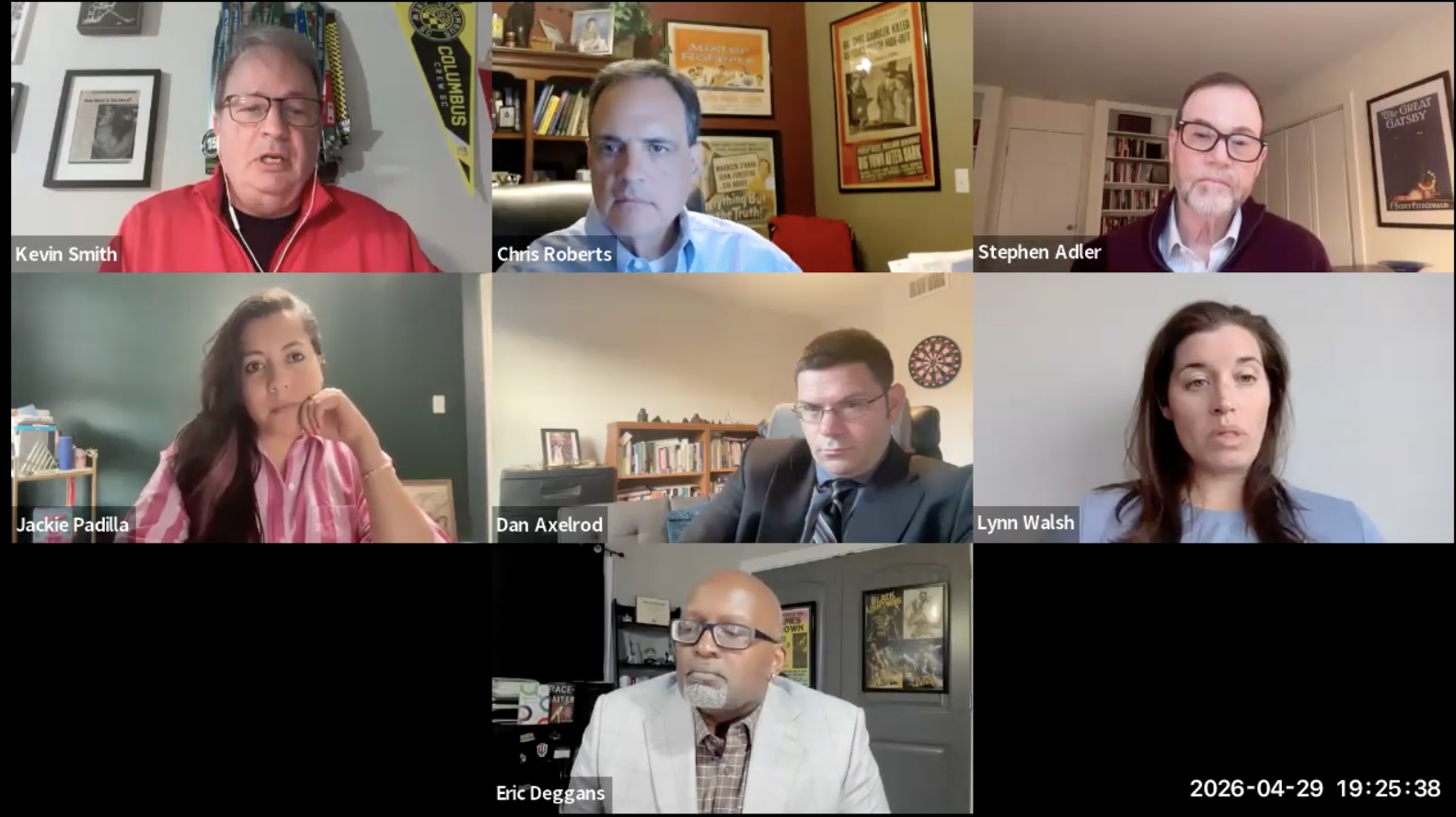
On April 29, seven members of the committee convened in a public Zoom session to discuss the issues with which they’re grappling. Two of the concerns committee members addressed should be obvious to anyone who cares about journalism ethics. Two others are less obvious – but no less important.
One overarching consideration, as Trusting News assistant director Lynn Walsh outlined early in the Zoom session, is the news audience’s view of journalism ethics. SPJ asked members of the public to respond to a survey about journalism ethics and how journalists can better serve their communities. Walsh told the SPJ audience that a distressing 68% of those who responded said they had seen unethical journalism in the last year, citing bias and unfairness, inaccuracy, incomplete information, sensationalism and misleading headlines.
But mostly, Walsh said, survey respondents felt they were not receiving enough information about how to decipher the news. They called for clearer distinctions between news and opinion, more prominent corrections, and greater transparency about editorial decision-making, particularly about the use of anonymous sources. Later in the discussion, Walsh suggested that a revised SPJ ethics code might include supplemental examples of best practices for disclosures about anonymous sources.
Addressing AI
The other glaring ethics issue for journalists is AI. SPJ’s last two code revisions, as committee member Kevin Smith of Ohio University’s Kiplinger Program explained, were prompted in part by technological advances: the rise of infomercials featuring journalists in the 1990s and social media in the 2010s. “Now it’s time to take a look at artificial intelligence,” said Smith, who also worked on SPC’s two previous revisions. “We need to get in front of this.”
SPJ ethics committee member Jackie Padilla, a broadcast journalist who is secretary of the National Association of Hispanic Journalists, said that newsrooms’ wide range of AI policies and usage can be confusing for both journalists and audiences. The challenge for SPJ, she said, will be to adopt guidelines that are not hyper-focused on the technology of the moment but are broadly worded to remain relevant as AI evolves.
A commitment to accountability should underlie any new AI guidelines, Padilla said. Journalists are trained to double-check and verify information they’ve received from human sources. They should be expected to apply the same rigor when they’ve obtained information from AI sources, Padilla said. And audiences, she said, “need to feel confident that there is human accountability behind what they’re reading or what they’re watching, especially in this heightened era of misinformation and disinformation.”
Padilla said that revising the SPJ code to address AI is ultimately an opportunity to define AI as a tool or supplement for human journalists and news organizations – but not a substitute. “The bottom line, and we all know this, is that it can’t replace judgment. It can’t replace context or lived experiences by people,” she said. “And I think it’s more important to say plainly that there isn’t a form of technology that can fully replicate what we, as people, bring to the table as journalists.”
Nuanced Concerns: ‘Voice for the Voiceless’ Controversy
The current SPJ ethics code includes a guideline that journalists should, in addition to holding the powerful to account, “give voice to the voiceless.” That phrase, said panel moderator and SPJ ethics committee co-chair Dan Axelrod, has proved to be one of the most controversial parts of the code.
Committee member Eric Deggans, an NPR critic-at-large and media ethics professor at Washington and Lee, explained why. It’s important for journalists to amplify the voices of people who are not receiving attention, “but saying that those people don’t have a voice is insulting,” Deggans said. “We have a voice, it’s just been suppressed and ignored.”
Deggans said the problem is partly one of language, suggesting that “marginalized” is a better adjective than “voiceless.” But later in the discussion, Padilla – who agreed that “voiceless” is problematic – said she doesn’t like the word marginalized either. “You could argue Latinos and Black Americans are emerging majorities in the United States,” Padilla said. “And who are we to decide who those [marginalized] groups are?”
The “voiceless” discussion revealed a broader debate over how the SPJ code should address coverage of overlooked or ignored communities. And that debate, in turn, offered a range of answers to the question of whether the code should be shaped by current events.
Deggans said that mainstream journalism has long accepted the premise that “systemic oppression is a thing, and that it affects everything from criminal justice to education to employment.” That premise is now denied by the MAGA movement, Deggans said. If journalists continue to accept its truth, he said, they have an even greater responsibility to cover injustices.
“Part of being a journalist is facing those tough truths and telling people things they don’t want to hear, which includes, ‘Hey, the American system, sometimes is awfully unfair to people who are not in power, deliberately so,’” Deggans said.
Padilla pushed back a bit on the suggestion that journalists have a special obligation to report on particular communities. “I think it’s really important to remember that with this code, we are viewing it through the lens of journalists, not as activists,” she said. “This idea that this code could realistically cover every single person and safeguard every single person, regardless of who they are, how they identify or their color or or anything beyond that – who are we to create that standard?”
A journalist’s duty, Padilla said, is to report facts using standards already laid out in the SPJ code, such as minimizing harm, fact-checking, and being transparent with audiences. “Then we are doing our job, and there’s room for activists to do their job,” she said.
When Politics and Ethics Collide
An audience member posed a provocative question to the panel. Was there a risk that any mention in the SPJ code of marginalized communities or of seeking out diverse voices might prompt state universities, in particular, to bar journalism professors from using the code to teach students about ethics? Many such universities, after all, have eliminated or scaled back diversity initiatives and even language in response to Trump administration directives.
How, “should we deal with political realities,” the questioner asked, when “any changes that bring attention to vulnerable populations are going to be a lightning rod?”
SPJ committee co-chair Axelrod responded that politicians come and go and SPJ generally does not make revisions with them in mind. After discussion among panel members about how journalists should respond to today’s politics, Ethics and Journalism’s Adler took a stand on journalists’ ultimate duty in the face of political pressure.
“Journalists are the last people who should be changing their standards because they’re afraid the government will dislike them or penalize them,” he said. “Our job is to figure out what, in our age, constitutes ethical journalism, and not then say, ‘Okay, but how are we going to do that in a way that doesn’t offend anybody?’ It’s incredibly important that we not succumb to self censorship or intimidation as we try to figure out just what the right thing is.”