
The Peter F. Collier Awards for Ethics in Journalism celebrate journalism done right.

The Collier Awards recognize acts of journalism by student and professional journalists that meet the highest ethical standards in the face of pressure or incentives to do otherwise. The awards are administered by the Ethics and Journalism Initiative at the Arthur L. Carter Journalism Institute at New York University. Founded in 2024, the awards are granted annually.
The Collier Award focuses both on the ethical process of reporting, alongside the quality of the published pieces. We care not only about what newsrooms publish, but how they got there, shining a light on the difficult ethical decisions, considerations, and questions in the pursuit of great journalism.
“The Collier Award is grounded in the belief that a greater focus on ethics—on rigorous, factual reporting, transparency, humility, and fairness—can help journalists become more effective and more trustworthy, and therefore more valuable to their audiences and to the broader community,” said Stephen J. Adler, Ethics and Journalism Initiative director.
Prizes

The Collier Awards recognize first-, second-, and third-place awardees in student, local, and national/international reporting categories. Awardees receive the following:
Student Reporting
A $5,000 award or scholarship for exemplary ethical journalism by a high school, undergraduate, or graduate student journalist ($500 for second place, $250 for third place)
Local Reporting
A $15,000 award for exemplary ethical journalism with local or regional impact or significance by a professional journalist or team ($2,500 for second place, $1,000 for third place)
National/International Reporting
A $15,000 award for exemplary ethical journalism with national or international impact or significance by a professional journalist or team ($2,500 for second place, $1,000 for third place)
Our Seven Core Ethical Issues
Ethical questions arise at all stages of the reporting process from idea to post-publication. With our seven core ethical issues, we strive to represent a range of challenges journalists might encounter in the course of their work. These may include working with emerging technologies, interviewing legally or medically vulnerable sources, and reading audiences into the reporting process. The following issues may be used as a starting point for applicants submitting their work to the Collier Awards:
Issue 1: Bringing ethical considerations into your threshold decision to report and publish the story.
Issue 2: Minimizing unnecessary harm to sources, subjects, or others in the community, while also fulfilling your commitment to report fully on newsworthy topics. When relevant, determining whether or how to identify sensitive sources.
Issue 3: Balancing privacy considerations with the imperative to disclose information in the public interest
Issue 4: Providing story subjects a fair opportunity to respond and upholding the “no-surprises rule,” despite the risk of losing exclusivity or triggering a pre-publication attack on the story
Issue 5: Ethically deploying data reporting or artificial intelligence
Issue 6: Avoiding false equivalency when the factual bases for opposing views are unequal
Issue 7: Providing transparency to the news consumer about how you made the ethical choices that went into the reporting of the story.
Our Ceremony and Symposium: Two Days of Celebrating Journalism Ethics in New York City

Every April, the Ethics and Journalism Initiative gathers news leaders, journalists, ethics experts, and engaged news consumers in New York City for two days of honoring ethical journalism and the exceptional local, student, and global journalists behind it.
First-place awardees are named at an evening ceremony at the Paley Center for Media. Past keynote speakers include Marty Baron, former executive editor of The Washington Post and editor of Boston Globe’s Pulitzer-Prize-winning investigation into child sexual abuse in the Catholic Church, and Dean Baquet, former executive editor of The New York Times.
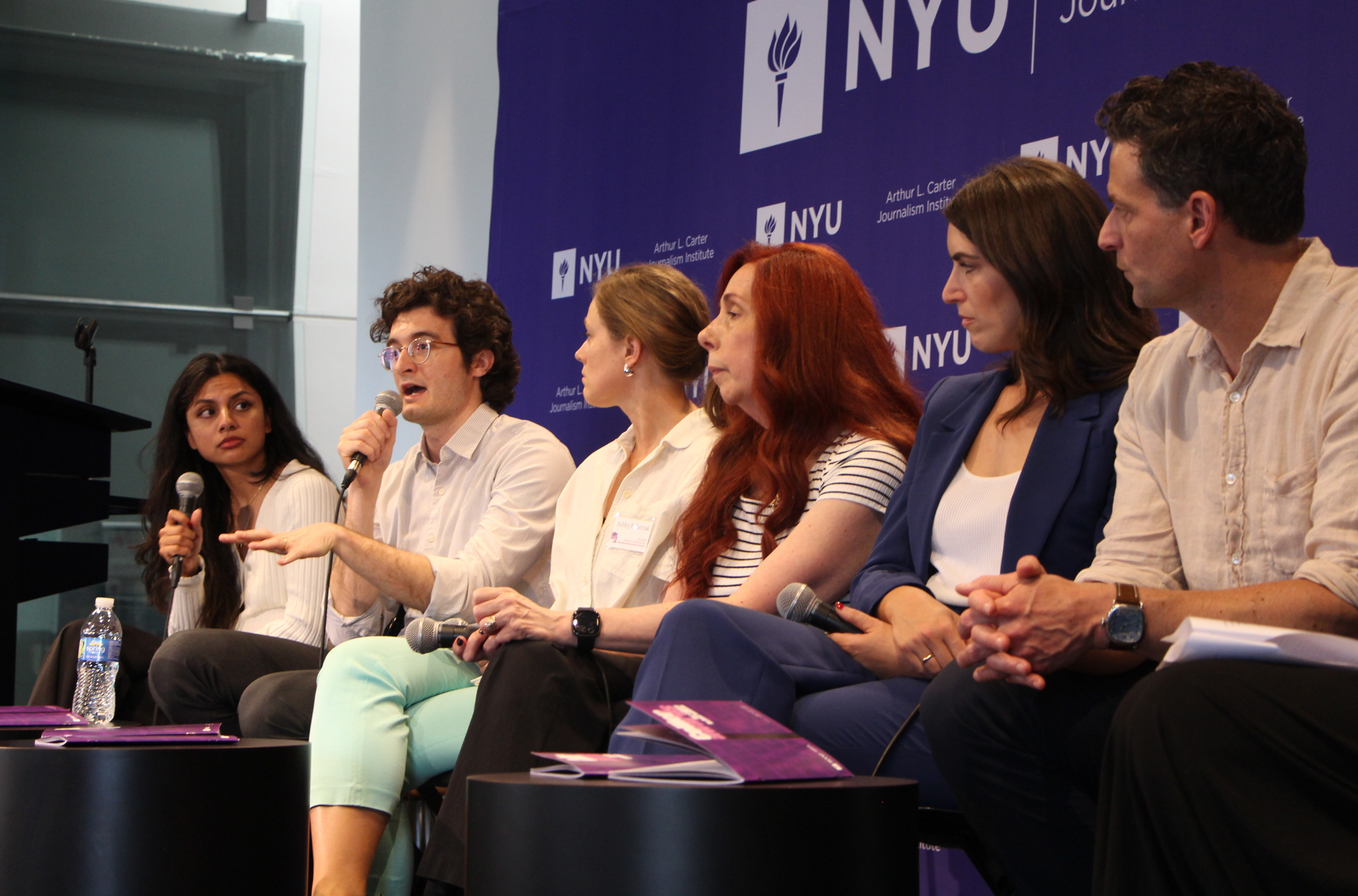
Then, awardees reconvene at New York University at the Collier Symposium, a series of free, public panels delving deeper into the year’s award-winning work.
Explore highlights from previous ceremonies and symposia.
The Collier Story
The Peter F. Collier Awards for Ethics in Journalism are made possible through a generous gift from Nathan S. Collier, founder and chairman of the Collier Companies, in honor of his great-grand uncle, Peter F. Collier, who emigrated from Ireland in 1866, became a book publisher, and founded the renowned magazine, Collier’s Weekly, in 1888.

“Trust is the foundation of good journalism, both in the reader’s trust in accuracy and the source’s trust in discretion and fairness,” Collier said during Awards’ 2024 kickoff. “Trust in turn flows from strong, ethical standards consistently upheld. The goal of the Peter F. Collier Award for Ethics in Journalism is to maintain and uphold ethical standards in the journalistic profession and thereby help create a better world for all.”