
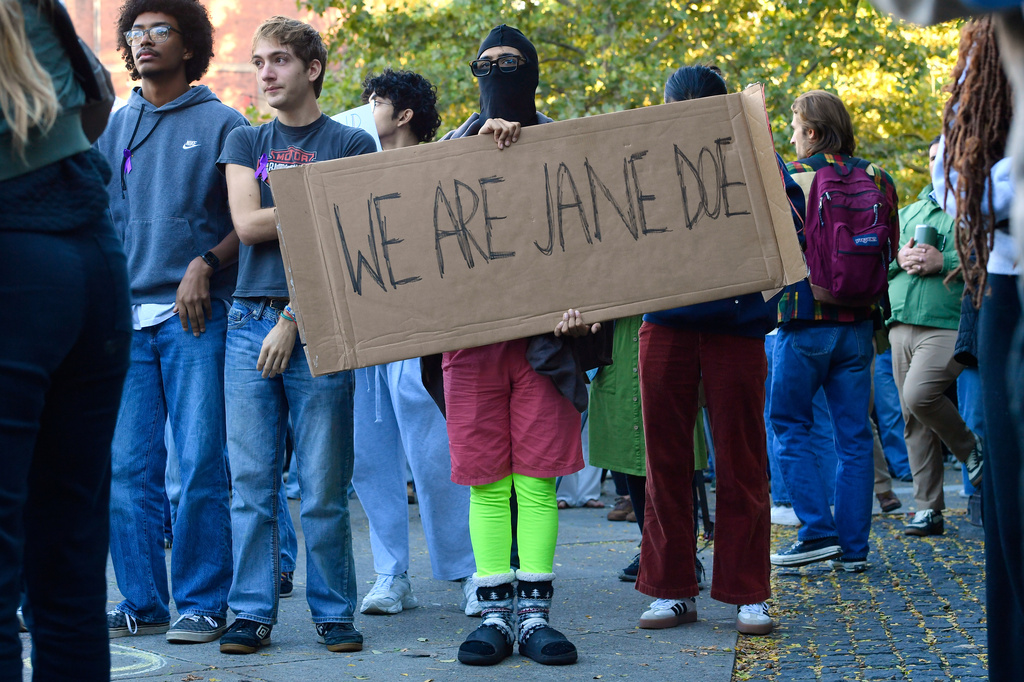

From the moment that the Cornell 7 story became a national phenomenon, the names of the seven men accused of participating in the sexual assault of a pseudonymous woman known as Jane Doe have been publicly available.
Student journalists at The Cornell Sun identified the men, all members of the Chi Phi fraternity at the time of the alleged assault, in an editorial published a few days after the Sun first reported on Doe’s civil lawsuit against the men, the fraternity, Cornell, and several other defendants. The student newspaper said it was naming the men – who had not been charged with a crime – because the university processes that shielded their identities had failed to protect Jane Doe and, more broadly, students across Cornell.
Some national news organizations, including ABC, CBS, and The Atlantic have also identified at least some of the men, all of whom have denied wrongdoing, by name in their reporting. The New York Times named all seven men in its detailed account of Cornell’s controversial disciplinary proceedings.
The Washington Post and The New Yorker, by contrast, have not used the men’s names, despite deep reporting on the case and its fallout. The Post specifically said it had decided not to identify the Cornell 7 by name because the men have not been charged with a crime.
There is, in other words, considerable room for editorial discretion when it comes to the ethics of naming people accused in high profile cases. The widely-referenced ethics code of the Society for Professional Journalists acknowledges as much, urging reporters and editors to “cautiously consider whether to identify suspects before they face charges,” calling on newsrooms to balance the public’s interest in a case with a suspect’s right to a fair trial.
To flesh out some of the considerations that may factor into decisions about naming suspects in high-profile cases, Ethics and Journalism Initiative Senior Adviser Alison Frankel spoke with Ghazala Irshad, Style and Standards Editor at The Marshall Project. Irshad’s newsroom specializes in reporting on the criminal justice system. It has not written about the Cornell 7 case.
This interview has been edited for length and clarity.
ALISON FRANKEL: The Marshall Project’s ethics standards say journalists should be judicious about naming people who have been accused of crimes, but not charged. Can you elaborate on what factors go into making a judicious decision about revealing the names of these people?
GHAZALA IRSHAD: I’m just discussing the editorial considerations here. A naming decision in this particular case would require reviewing the relevant reporting and evidence about each individual.
We do advise being judicious, starting with what we’ve independently been able to verify and then thinking about the case and what evidence there is, and why identifying someone matters to the public. We ask ourselves questions like, “Is the name essential to understanding the story or exposing someone abusing power?”
I would look at what we know about each person’s actual conduct and not lump everyone together because I know that was a consideration with [the Cornell 7] case. The allegations and any findings may differ from person to person. We need to distinguish what is alleged, what has been established through reporting or a disciplinary process, and what remains disputed.
Giving everyone a meaningful opportunity to respond is another important consideration. And then thinking about what kind of harm could be caused to the person being named, even to the person reporting the assault and to the people who could be wrongly identified. Could naming an accused person inadvertently identify the person doing the accusing, based on their relationship? There are so many things to think about.
I’d also think about how we present that information. Are we going to clearly distinguish allegations from actual findings? And then we need to also be prepared to follow the story and update it. That’s, I think, one of the biggest issues with a lot of crime journalism.
ALISON: Those are all really important points. In this case, the accused [men] were not named until Jane Doe filed a civil lawsuit. There’s an argument to be made that the lawsuit, which was a public document, put those names into the public domain. Does that factor in?
GHAZALA: Names being in a lawsuit tells us that someone has made an accusation. But it doesn’t establish that the accusation is true. So we still have to report it out. Identifying someone may be necessary to a well-supported story in the public interest, but we need to explain why their identity matters.
Organizations like The Marshall Project or The New York Times, we have a broad reach, and that affects the potential harm that could be done. Publication can have serious, lasting consequences, particularly if someone is misidentified or the reporting overstates what the evidence supports.
I would not say [you should] never name someone who hasn’t been criminally charged or always name someone who’s been criminally charged. I’d say, “What can we verify? Why does the public need to know the person’s name and have they had a chance to respond? What harm could publishing it cause?”
ALISON: The student newspaper reported that the university expelled two of the people named in Jane Doe’s lawsuit. Knowing that the university went through the Title IX process and expelled these two, would that be something that would weigh in favor of naming them?
GHAZALA: A university finding of responsibility can weigh in favor of naming someone. We would want to understand exactly what was found, the process and evidence supporting it, and any appeal or challenge. We should describe a disciplinary finding accurately and distinguish it from a criminal conviction.
The Sun’s editorial framed its decision [to name the men] around campus safety and institutional accountability. Different audiences can affect the public-interest considerations, but the obligations to verify, be precise and treat people fairly apply to every newsroom.
ALISON: One of the things that has been interesting about this case is that the penumbra of misconduct has extended so broadly. The New Yorker ran a piece about how this sort of guilt by association has extended to people who, at least by their account, had no association with the alleged assault but were just on an obsolete version of the fraternity’s group chat. My hometown weekly ran a story about the former president of the frat, a local Cornell student, who was not accused of assault but was named as a defendant in Jane Doe’s lawsuit for failing to assure the fraternity was a safe place. (Editor’s note: Jane Doe dismissed the former Chi Phi president as a defendant on Oct. 20, reportedly because he was misidentified as president at the time of the alleged assault.)
GHAZALA: At The Marshall Project, being precise really matters. When we are writing about these broader things, we would be very careful to say that being in a group chat does not mean that someone necessarily read the messages, or being president of a fraternity does not mean that they had a role in a rape.
Naming someone in a leadership role may be relevant when reporting on their responsibilities and actions. We would need to explain why that person’s identity matters to the story; being interviewed by police alone does not establish wrongdoing.
There are all these other things that we’d need to report to establish a connection. [We would] definitely never leave readers with an impression that everyone we’ve named in a story is accused of the same conduct.
ALISON: Some of the accusations against people who were accused of being part of the group chat – and, according to The New Yorker, were wrongly accused – didn’t come from journalists but from online commenters.
GHAZALA: People’s concerns about safety are understandable. But those concerns don’t justify misidentifying people, circulating unverified accusations as fact, or harassment. Journalists have a responsibility to verify identities and describe the evidence and each person’s alleged role precisely, especially when our work is in print and creates a historical record.
We should assess firsthand accounts and other evidence, seek corroboration where possible, and clearly distinguish verified facts, allegations and unresolved questions.
We can report on how people are responding to the allegations, including their concerns about safety, trust and bystander intervention. We should distinguish those experiences and reactions from factual conclusions about any particular person’s conduct.
ALISON: So when you do the balancing test on whether to name or not name, that’s the kind of story where you don’t have to name names.
GHAZALA: That kind of story may not require identifying the accused individuals. But any specific allegation we include still requires careful verification and a meaningful opportunity to respond. And I think centering the people who are impacted is important.
ALISON: The flip side of this all, of course, is is whether to identify victims of alleged sexual assault. Jane Doe’s lawyer has said that she actually wanted to name herself but he talked her out of it because he was concerned she would face exactly the kind of retribution that she has faced. But it’s likely that Doe’s own actions will be vigorously litigated if there is a criminal case. Should there be different standards for naming accusers and the accused?
GHAZALA: Consent to one sexual act or encounter does not establish consent to other acts or people. The specific allegations require careful reporting. Separately, people reporting sexual assault can face stigma, threats, and retaliation; and gender and power dynamics can shape those risks. Those consequences matter when considering identification.
In sexual-assault coverage, I generally favor withholding a victim’s identity without their informed consent because we see how there’s so much retribution for making an accusation. When someone wants to be identified, journalists should discuss what publication entails and consider the potential consequences with the victim. Decisions about identifying victims of other crimes depend on the circumstances.
ALISON: Just in the sexual assault context, or at all? It does seem like most publications that name victims carve out out exceptions for victims of sexual assault. Do those policies perpetuate the idea that someone bears special shame or stigma from being publicly identified as a victim of that brand of assault? Maybe we shouldn’t name any victims.
GHAZALA: Privacy protections should support a person’s safety and agency. They should not suggest that experiencing sexual assault is something to be ashamed of.
ALISON: I like the idea that you do your own checking and you decide: Do I need to name people? And if I do feel like I need to name these people, have I given them a sufficient opportunity to respond? Weighing the equities seems like the way to go.
GHAZALA: Yes, being judicious comes down to verifying independently, explaining why it matters if we do name someone, and then being super precise about a person’s involvement. So not lumping them in and doing a broad brush.
Those responsibilities belong together. We can respect victims. We can still treat an individual who is accused of a crime fairly and hold the institutions accountable.