

What should reporters and editors do when a philanthropic funder starts applying pressure on them to cover, or not to cover, a particular story in which the funder has an interest? Or when the funder complains to the publisher or editor about the direction of a story in progress?
I’ll provide some recommended answers below. First, some background.
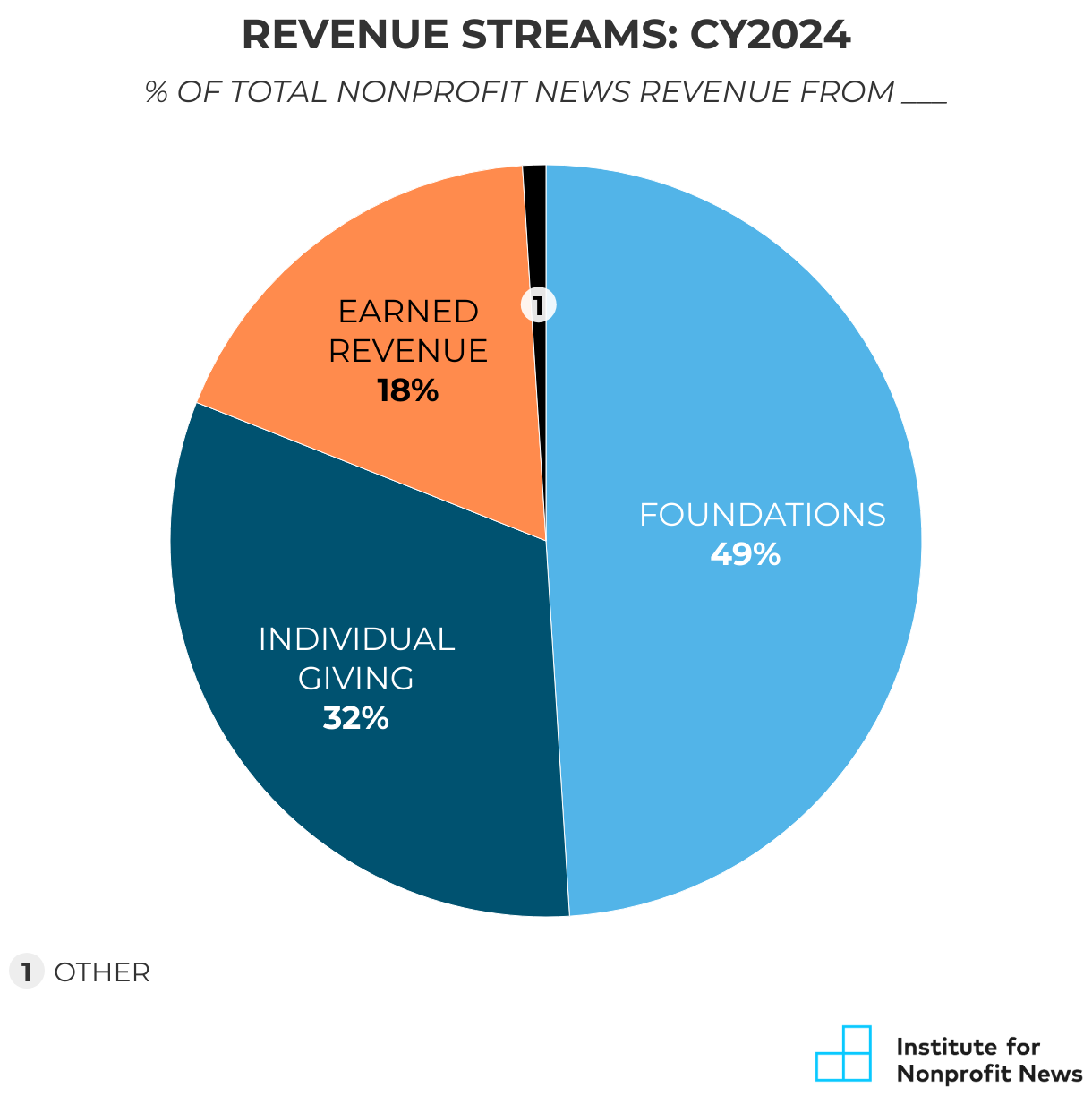
These scenarios present urgent real-life issues for many local newsrooms, especially not-for-profits, now that more than 700 U.S. newsrooms in the U.S.are funded, at least in part, by foundations or other philanthropies.
That number, which is a highly conservative estimate to start with, appears to be growing, with local not-for-profits receiving the bulk of philanthropic funding but with for-profits increasingly part of the mix.
I am a great believer in philanthropic support for the news industry, especially in the vital arena of local news. Such support is reenergizing coverage of local and state government, school boards, law enforcement and criminal justice, human rights, the environment, and health care.
Moreover, potential editorial conflicts with newsroom funders are just a twist on the perpetual challenge of separating business interests from independent journalism. After all, news organizations have always been funded by someone – whether advertisers, subscribers, the government, or philanthropy. Take advertisers: A business-side executive of a magazine I then edited came to see me in person one time to inform me pointedly that if we published a particular story, we would risk losing $1 million in advertising. He said the choice was mine, of course, but I knew that the lost revenue would trickle down into lost reporting jobs. We published anyway, but the implied threat was chilling.
During my tenure at Reuters, the issue was subscribers: Major banks and corporations that paid hundreds of thousands of dollars to use our financial platform would complain about our coverage to our CEO and board members, who always were – thankfully for us and for journalism – staunch supporters of journalistic independence. Not every newsroom editor in America has been so lucky.
In the land of philanthropy, especially with foundations, potential conflicts can be more subtle: The donor is a friend in that it is supporting local news and may be primarily responsible for your newsroom’s existence. It is an outspoken proponent of filling news deserts with lovely new shoots. It is employing journalists, for goodness sake. It may even have collaborated with you on your launch.
Nonetheless, donors have their own institutional – and perhaps commercial or personal – interests apart from their news philanthropy and may not fully understand that independent reporters, turned loose in the community, could very well end up investigating some of a funder’s other activities or those of peers, friends, and colleagues. Donors have, to put it gently, been known to raise questions. When there’s a single large donor, conflicts can be especially problematic.
The NYU Ethics and Journalism team has been studying and discussing donor-conflict issues in connection with our local-newsroom training project. Based on our own experiences in newsrooms and on these conversations, here are our recommendations:
- A news organization should disclose the fact that it is donor-funded and provide a summary of, or link to, its journalism-independence policy at the bottom of each article, as some do but many don’t. A great positive example is the Tulsa Flyer, which appends this to its stories: News decisions at the Tulsa Flyer are made independently of our board members and financial supporters. Read more about our editorial independence policy here.
- In addition, a news organization should disclose within any story the identities of any donor organizations that are mentioned in the story.
- News organizations should establish a policy that any donors’ concerns about a story, at any stage in the editorial process, should be raised with the publisher or editor-in-chief, rather than with reporters. A donor’s concerns ordinarily should not be shared with the reporter. If the complaint seems to have validity, it is up to the editor to discuss any substantive question with the reporter.
- If a donor requests a meeting with the reporter, editors should handle any initial conversation. In ordinary circumstances, an editor should be present in any donor-requested meeting with the reporter, and the conversation should be on the record. The CEO or publisher should never participate.
- A donor should not communicate directly with a reporter unless the reporter has asked to interview the donor. Editors should make clear to reporters that they should inform their editor if a donor gets in touch.
- Ethically, when a donor becomes a subject or source for a story, it’s vital to report neither more favorably nor less favorably than one would do otherwise. In other words, treat the story like any other.
If you are a reporter or editor who faces a conflict with a donor, or you are a donor struggling to manage relationships with a newsroom, feel free to get in touch.
The NYU Ethics and Journalism is donor-funded and operates independently from any of its funders. Here is a list of funders and our statement of journalistic values.