
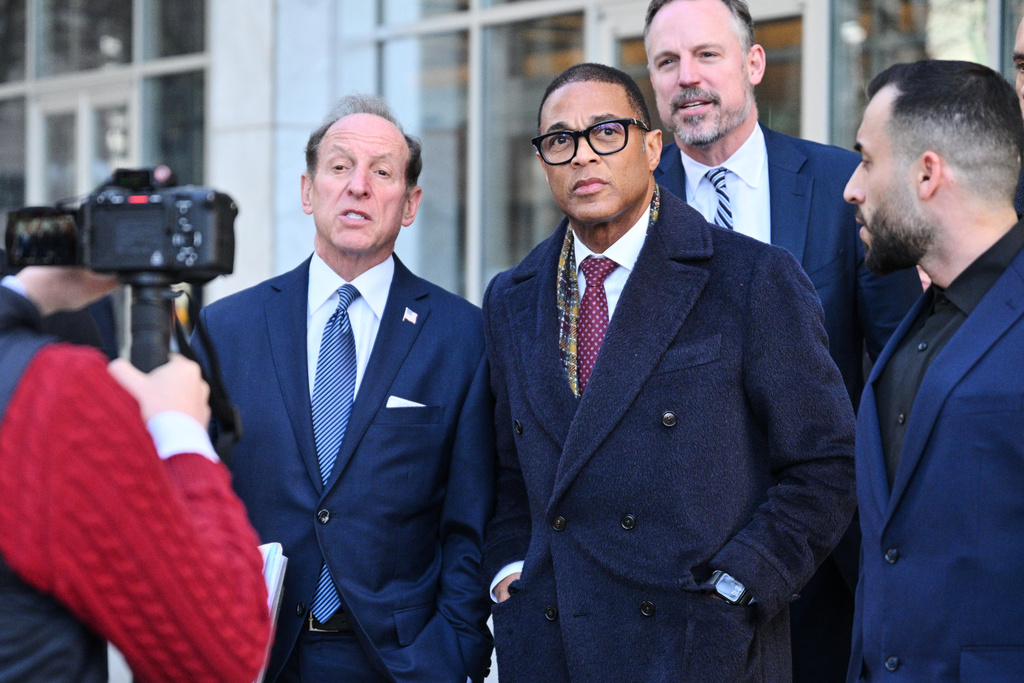

The federal indictment last month of former CNN anchor Don Lemon for allegedly working with Minnesota activists to disrupt services at a St. Paul church is a chilling legal development for journalists. As the Reporters Committee for Freedom of the Press said in a Jan. 30 statement about the arrest of Lemon and fellow independent journalist Georgia Fort, it is apparently unprecedented for the U.S. Justice Department to deploy a federal law protecting religious services in connection with journalistic activity.
Lemon, who entered a not guilty plea on Feb. 13 in Minneapolis federal court, himself said in a column in The New York Times that his arrest should be seen as an escalation of the Trump Administration’s “pattern of intimidating the press, physically harming reporters who are covering protests, and, now, taking legal action against members of the media.”
Reporting on protests, as Lemon did, implicates complex ethical questions alongside legal issues, as Ethics and Journalism Initiative Director Stephen Adler observed at our panel discussion last year on how to cover demonstrations on college campuses.
On the day of the protest that led to his indictment, Lemon livestreamed events for more than an hour, from the moment he arrived in the Minnesota parking lot where protesters had gathered to the aftermath of activists’ disruption of services at the St. Paul church. Lemon’s minute-by-minute chronicle of what took place before, during, and after the protest is an opportunity to discuss his ethics choices – and to derive best practices for other journalists covering activist actions.
The pre-protest phase
Lemon said during the livestream that he learned about plans for the protest early in the morning of the day the action was slated to take place.
He did not reveal on the livestream who had informed him of protesters’ plans to disrupt services at Cities Church, where, according to protest organizer Nekima Levy-Armstrong, a federal immigration official allegedly serves as a pastor. Lemon also did not reveal how much he knew about the operational details of the planned operation, though he appeared to know where the protest would take place. During his coverage of the parking lot gathering, Lemon told viewers that he could not disclose specifics until the operation launched.
There is nothing particularly unusual, said media journalism professor and Knight Wallace fellow Nidhi Prakash, about a reporter receiving advance notice of a planned protest and embedding with activists to cover the operation. The circumstances are analogous, Prakash said, to journalists embedding with military groups to be able to provide an in-depth look at their operations.
“You need to know when and where to show up in order to actually report on these protests,” said Prakash, who frequently covered protests as a BuzzFeed News reporter. “And you are usually physically situated with the protesters because that’s where you need to be to document [the event] unfolding.”
For mainstream journalists, it’s important, especially in situations in which you are embedded with a group undertaking an operation, to draw a line between your role as a reporter and the group’s mission. Generally accepted journalism ethics call for reporters in these situations to observe and document without taking sides.
Lemon, however, is not part of a typical news organization, Prakash said, and his YouTube audience may expect him to show his own opinions more overtly than, say, his CNN audience. “The framework that he’s in is different from what it would have been when he was a CNN anchor,” Prakash said. “ The key there is transparency. It’s being very clear about what position you’re coming from, what role you’re playing and why.”
Lemon did draw a line in his livestreamed coverage between himself and the protesters. When he used the word “we,” for instance, he appeared to refer to himself and his producer. He used the word “they” when he described the activists, telling his audience, for instance, that he could not intrude as protest leaders huddled together because “they are strategizing.” He did not join in when protesters chanted together and did not drive to the church with protesters.
Nevertheless, at various points during the livestream, Lemon behaved in a way that could signal his support for protesters’ planned operation. He thanked the group for allowing him to report on the operation. He did not ask probing questions in his interview with protest organizer Levy-Armstrong, a lawyer and civil rights activist. And when one of the protester’s trucks got stuck on a snow drift, Lemon jumped out of his own truck to help the protester. The latter action, in particular, could signal to viewers that he was assisting the operation, or was at least a friendly observer.
Moreover, during the drive to the church, he told his audience a story about being recognized by a Starbucks barista that morning. The barista, Lemon said, had written a message on his cup: “Thank you for your work. Crush ICE.” Lemon laughed as he recounted the message to his audience.
Dan Axelrod, who chairs the ethics committee of the Society for Professional Journalists, said Lemon should have been even more transparent with viewers about his opinions and his journalistic choices. The SPJ ethics code, Axelrod said, does not specifically address advocacy journalism. But elements of the code – including guidance to “label advocacy and commentary,” “deny favored treatment” of sources, “never deliberately distort facts or context,” “explain ethical choices and processes to audiences,” and “abide by the same high standards they expect of others” – apply to opinion journalists like Lemon.
Axelrod said in a statement that Lemon fell short of those goals – but also said in a follow-up interview that he would not characterize Lemon’s reporting as unethical. “At the Minneapolis immigration protest, Lemon sometimes failed to adequately label his advocacy journalism, clearly favored and even glorified his sources, made little to no attempt to create a balanced report, and engaged in behavior that sometimes seemed like source coaching,” Axelrod’s statement said. “But the many areas for improvement in Don Lemon’s Minneapolis reporting reflect common issues among opinion journalists.”
A spokesperson for Lemon said in a statement that Lemon stands by his reporting that day. “Don was there to record events as they happened, as a journalist,” the statement said. “He asked questions of everyone involved – before, during, and after the protest. He was clear about his role, which he repeated numerous times for both his live audiences and the participants in the room. The video speaks for itself.”
Entering the church
Lemon did not closely coordinate his arrival at the church with protesters. He traveled in a separate car and went into the church by himself, not with any of the activists. Once inside, he stood on the sidelines as protesters chanted. Lemon repeatedly reminded his audience that he was there to report on the event, not to participate in the protest. All these reflect best practices for a journalist covering protests.
“I’m not going to get in the middle of it because I’m not here as an activist, I’m here as a journalist,” he said at one point.
Lemon went out of his way to request comment from parishioners. He told each of his interview subjects that he was covering the event as a reporter. He was forthright in his questions. Lemon challenged some of the answers offered by congregants but remained respectful and professional.
Those actions and statements are consistent with traditional ethics guidelines for reporters covering protests. “He was trying to kind of engage in a conversation and also push back on things that they might not have known about,” said journalism professor Prakash.
On the other hand, in the church, as in the parking lot, Lemon also allowed his own views to be part of his coverage. He justified protesters’ anger, saying that it was prompted by the unconstitutional conduct of federal immigration officials. He also defended disruptive protests, telling his audience that the civil right movement depended on such tactics.
“You have to be willing to go into places and make people uncomfortable,” Lemon said.
Journalism professor Prakash said she did not think Lemon’s comments detracted from his reporting inside the church because he “repeatedly tells everyone he talks to that he’s a journalist.” She added, however, that Lemon was less rigorous in his interviews with protesters than with congregants, allowing protest leaders to present their arguments without much pushback from him. “That doesn’t serve anybody,” she said.
Interviewing the pastor
The government alleged in Lemon’s indictment that he and protesters “surrounded” the pastor who had been leading the service “in an attempt to oppress and intimidate him.” The government claimed that Lemon “peppered [the pastor] with questions to promote the operation’s message.” (The pastor who was leading the service on the day of the protest was not the man protest organizers had identified as an ICE official.)
What the livestream video shows is that Lemon conducted a fairly straightforward interview with the pastor, albeit in the midst of a noisy, chaotic situation.
Lemon asked for the pastor’s thoughts about the protest, leaning in to hear the man’s answers.
Lemon did engage in some back-and-forth with the pastor, asserting (incorrectly, as will be explained later in this piece ) that the protesters had a First Amendment right to be in the church, asking the pastor whether Jesus would have supported the protest, and querying whether the pastor had tried to talk to any of the activists. But the pastor himself seemed to regard Lemon as a journalist asking questions, not as a protester.
The Washington Post, which analyzed audio and video evidence from the protest, including Lemon’s livestream, in a Feb. 13 story about apparent contradictions between that evidence and the government’s allegations, concluded that based on video and audio recordings, “at no point does Lemon appear to obstruct the pastor’s movement.”
Lemon is asked to leave
After Lemon asked a few questions, the pastor said he had asked the protesters to leave and requested the same of Lemon. Lemon reiterated that he was in the church to chronicle events. The pastor responded that unless Lemon was there to worship, he should leave.
Once the pastor told Lemon he was not welcome inside the church, Lemon had an ethical choice to make. The First Amendment does not, in fact, give anyone – whether they’re protesters, journalists, or bystanders – a right to remain on private property when they are asked to leave. The amendment limits the federal government’s power to restrict speech but does not require property owners to allow protests to take place.
A reporter in the scenario Lemon faced might decide immediately to vacate the church rather than risk allegations of trespassing, which can be a violation of state law. The Reporters Committee statement noted that state prosecutors rarely succeed in trespass cases against journalists documenting a protest on private property. But reporters should be familiar with their news organization’s rules. Some outlets caution against trespassing even while covering a newsworthy event.
But a reporter might also decide – as Lemon apparently did – that the public interest in documenting a newsworthy event outweighs the risk of trespassing. For several minutes after his interview with the pastor, Lemon remained in the church, interviewing parishioners, depicting church members in prayer, and defending protestors’ disruption.
There’s no universal answer in situations like this, when you must balance newsworthiness with accusations of trespassing. But if you are covering a protest on private property, it’s important to think in advance about what you’ll do if you are asked to leave the premises. If you don’t want to risk arrest, said Prakash, you should remain on the outer edge of crowds to avoid being funneled into a contained area when law enforcement arrives on the scene.
Overall, said SPJ ethics committee chair Axelrod, Lemon’s reporting on the St. Paul church disruption seemed “clumsy, semi-dubious, ostentatious,” and colored throughout by Lemon’s advocacy for the protesters.
Nevertheless, Axelrod said, “the fact that he could have done a radically better job as an opinion journalist – and the fact that, in a perfect world, opinion journalists would follow all the same standards of rigor and evidence as a traditional reporter – doesn’t change the fact that he had a right to do it. And he wasn’t being unethical.”
Takeaways
- It’s okay to embed with protesters on their way to an operation as long as you make clear to your audience – and your sources – that your role is to document the event, not to assist the operation
- Identify yourself as a journalist throughout the operation, to sources, protesters, and your audience.
- Avoid active participation in the event, and don’t provide protesters with assistance.
- Seek comment from those with differing views. Try to treat all interview subjects equally, including in the rigor of your questions, so you can avoid bias.
- Provide context that explains the circumstances of the action. That might include historical context, such as Lemon’s reference to the civil rights movement, or information about the protesters and their targets.
- Recognize that you don’t have a First Amendment right to report on private property. Have a plan in mind if you are asked to leave.